Mercedes launched a new advertising campaign, and I really like it. Watch the 30 sec commercial in the video below!
There is a sentence appearing repeatedly both in the video and on the billboards, it goes like this:
“I want you, I can be yours.”
The advertising campaign is aimed at young people, it is fresh, provocative and the above mentioned phrase has clearly a sexual subtext.
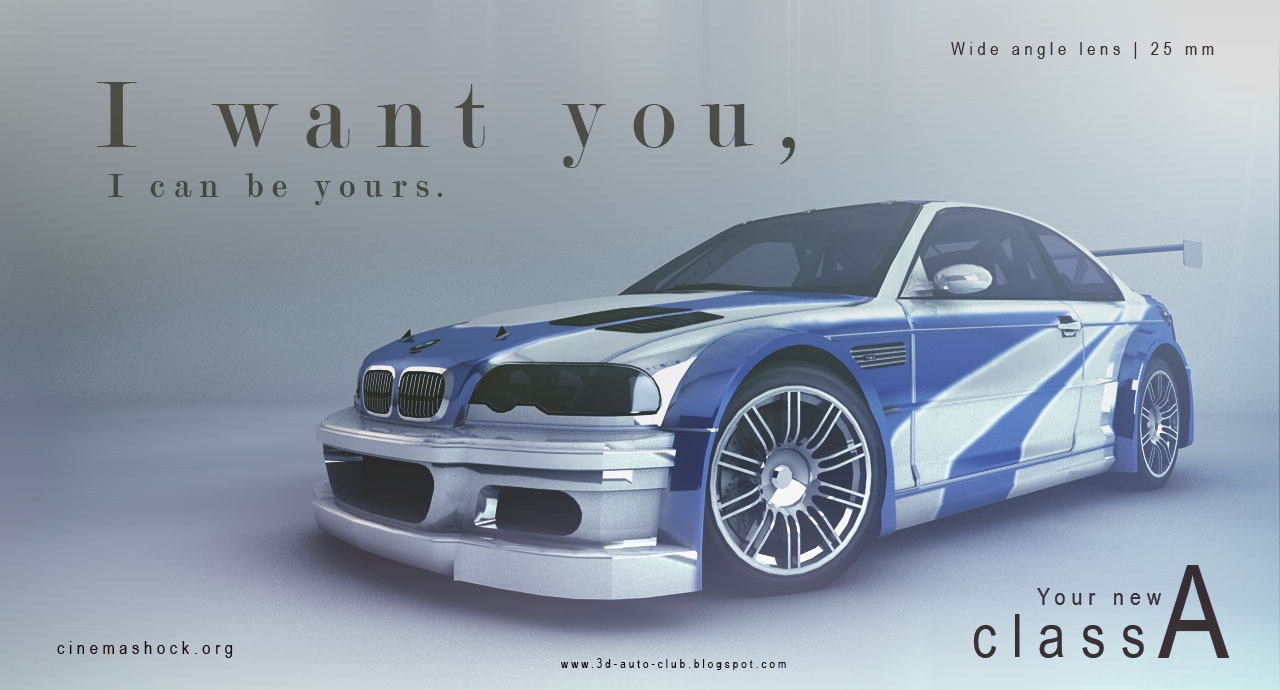
The photo above is used for the billboards, unfortunately it is without any text, so you have to trust me that there is the sentence: “I want you, I can be yours.”
Ok, at this point we know what the story is, what is the message. Let’s look now how it is told.
Wide angle lens
The photo above was taken with wide angle lens. Wide angle lens distort the image (the wider the lens the bigger the distortion). Straight lines are curved and physical dimensions are exaggerated. This effect is clearly visible, if you get close with wide angle lens to your subject.
Now, because of the wide angle lens, the car is optically distorted. If you look at the image again, it seems like the car is popping out, trying to reach you. And I think this is exactly what they wanted!
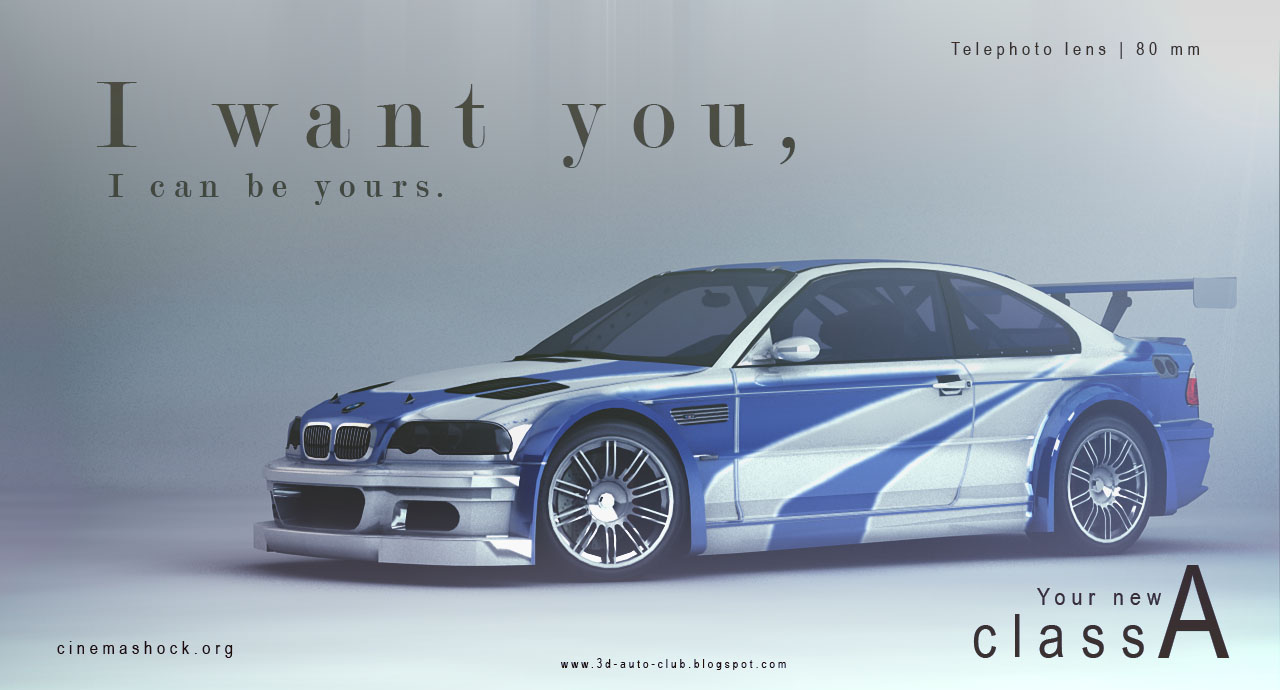
Additionally, I did a quick test to see a comparison between wide angle lens and telephoto lens.
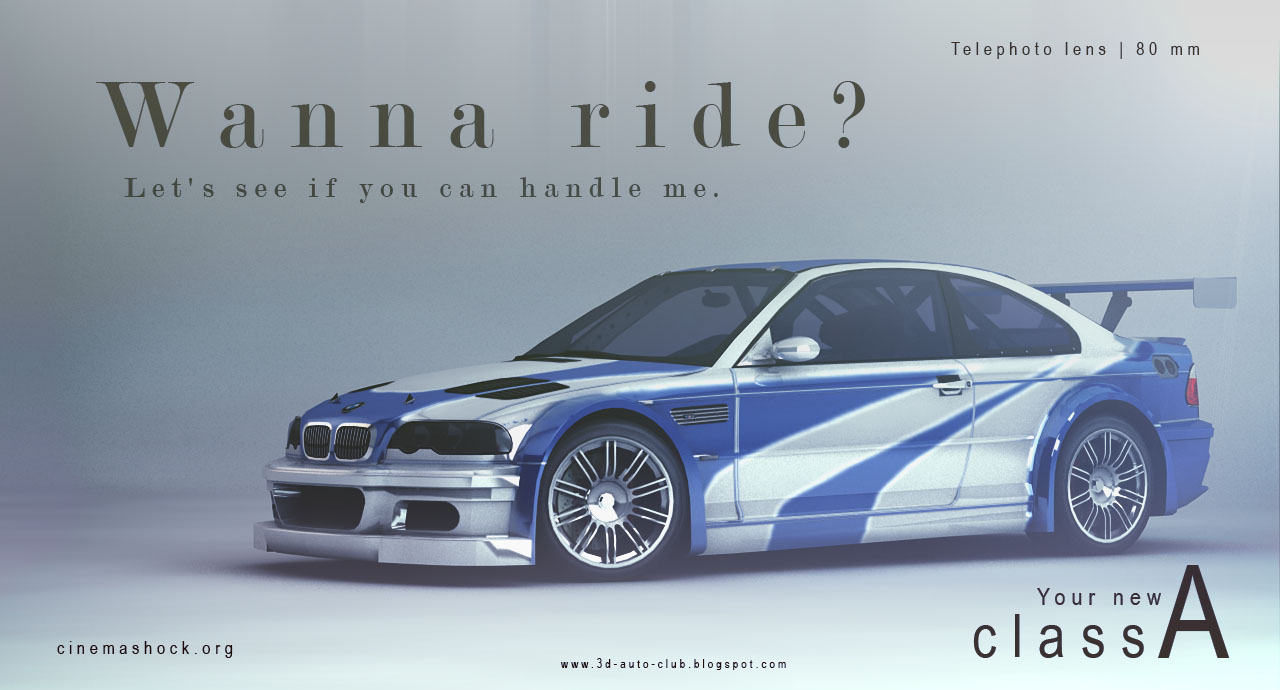
For me, the telephoto lens doesn’t convey the message. I like the telephoto version a lot actually, but I think it does convey a different message. Maybe something like this:
I find shaky camera to be extremely annoying. Most of the time the camera shakes for no reason and covers basically 3 mistakes (1) (bad acting, bad set design and bad directing). There are only few movies where shaky camera actually serves the story being told (like in Bourne trilogy).
There are movies though, where shaky camera is used in a way that you won’t be even aware of it.
I re-watched recently American Beauty and noticed that the camera was always mounted either on tripod, dolly track, steadicam or crane. There is only one scene, where the camera was handheld (just a note, I don’t count the DV camera that Ricky uses, even though it is handheld).
American Beauty (1999)
It’s a fight scene between Col. Frank Fitts and his son Ricky. He (Frank) is mad and angry at his son and beats him (Ricky) brutally.
The camera in this particular scene is handheld. It helps to portray his (Frank) anger and it injects more energy to the scene. Just try to imagine the opposite: Camera would be mounted on tripod or would move very smoothly. That wouldn’t work, because conflicts (especially family conflicts) are far from being smooth.
The handheld camera was such a great choice, that I noticed this only recently. It feels so natural; it feels like this was the only possible way how to shoot this scene. Handheld camera is a key to “secret” why this scene works emotionally.
As always, shoot me any comments you might have! 😉
In the previous article, we talked about a very powerful technique that is used in film sound design. In this article, we’ll talk about another technique which is equally powerful, but maybe little bit more fun to do.
Sound is all around us. Each human experiences sound every day, and learn about them, just like we learn a language (1). Most of the sounds have the ability to create an emotion or feeling inside us. For example, the air-distorted rippling effect you hear when a fighter jet flies by creates a sense of incredible speed. Or the sound of rattlesnake might create sense of fear, threat and anxiety inside you.
We could name thousand examples like this, but the important thing is that to each sound we hear, we usually connect some emotion or feeling. It’s really like learning a language; to every word (sound) you connect some event, space, thing, person, emotion, feeling etc.
Now, the job of a sound designer is to learn that language, transcribe it, understand it and enhance it (1).
Sweetening
Knowing what feeling and emotions various sounds evoke in us could be used in a very powerful way in sound design. In the video below you’ll see an example of car sweeteners created from animals. This gives the car an animal like quality; it creates the feeling of raw power inside you.
So sweetening is a process of subtly mixing an additional sound to a pre-existing sound to “sweeten” the pre-existing sound (2).
Now, the type of sweetener that gets subtly mixed into the pre-existing sound really depends on the story you are trying to tell.
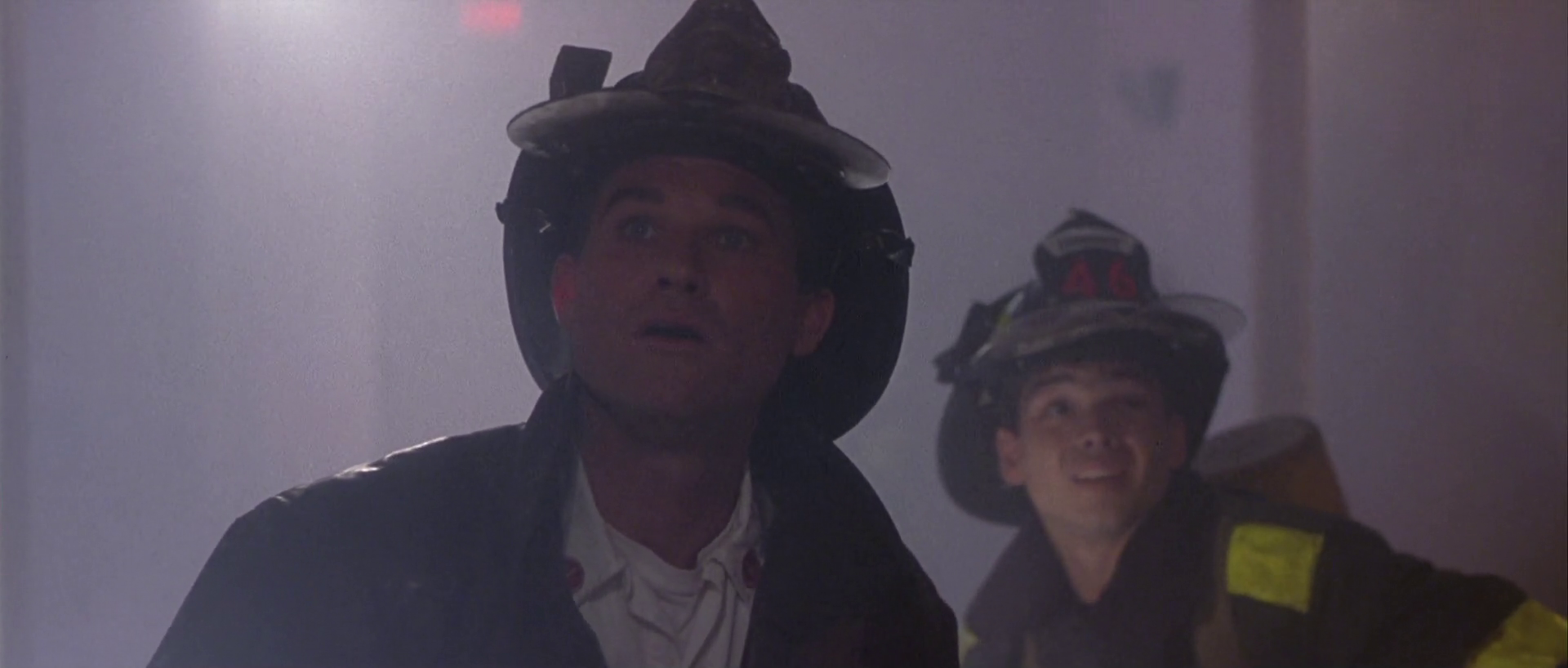
Sound sweetening in Backdraft
If you ever tried to record something with a microphone, you’ll know that not always the recorded sound conveys the feeling and emotions associated/connected with the recorded element. Fire is a very good example, because simple sound record of a fire wouldn’t convey the threat, menace, danger or fear that fire represents. Fire itself is actually quite boring in terms of sound that it produces. But there is an “easy” solution.
Sound designer Gary Rydstrom used animal sounds like growls and coyote howls as sweeteners for the fire. You don’t hear them as animal sounds, but subconsciously it gives the fire intelligence or a complexity it wouldn’t normally have. A lot of the fireball explosions were sweetened with monkey screams and different animal growls (like cougars that make a great fire explosion sweetener) (3).
The video below shows, how Gary Rydstrom used sweeteners (animal sounds) to give a truly menacing quality to the fire, flames and explosion, enjoy!
I’d like to finish this article with words from a brilliant film sound designer Randy Thom. The following paragraph comes from his article written for filmsound.org:
You begin by trying to forget for a while what the Nazi tank in an Indiana Jones film would “really” sound like, and start thinking about what it would FEEL LIKE in a nightmare. The treads would be like spinning samurai blades. The engine would be like the growl of an angry beast. You then go out and find sounds that have those qualities, or alter sounds to make them have those qualities. It makes no difference whether the sounds you collect actually have anything to do with tanks, samurai blades, or growling animals. The essential emotional quality of the sounds is virtually ALL that matters(4).



 CINEMA SHOCK