Cinematic storytelling is about connection between various filmmaking techniques (in this case color palette) and their function within the narrative of the film.
This excellent article guides you through color palette in various movies and answers questions to “what, how”, but most importantly answers the “WHY” question! Love it!
Have you ever wondered or noticed why certain films look a certain way tonally? It is not just a simple matter of color grading an image in post-production. A director works closely with a director of photography, production designer and costume designers to create a color palette that fits the story of the film. The color of the film is controlled on a set. Each story itself can be told in a plethora of ways – meaning, depending on what that story is about, and what is the thematic underpinning of it – the look of the film will often be based on those factors. For instance it may depend on the setting and the world within which the story takes place; time period, location of it. Therefore the color palette of the film will largely be dictated by these elements. So let’s start looking at some examples..
In one of the previous articles, we talked about how different shot sizes and framings bring different level of intimacy and tension. Well, another interesting way of looking at this is in terms of contrast and dynamics.
Master shot juxtaposed with medium shot or close-up creates contrast. Contrast creates drama and drama is interesting to watch.
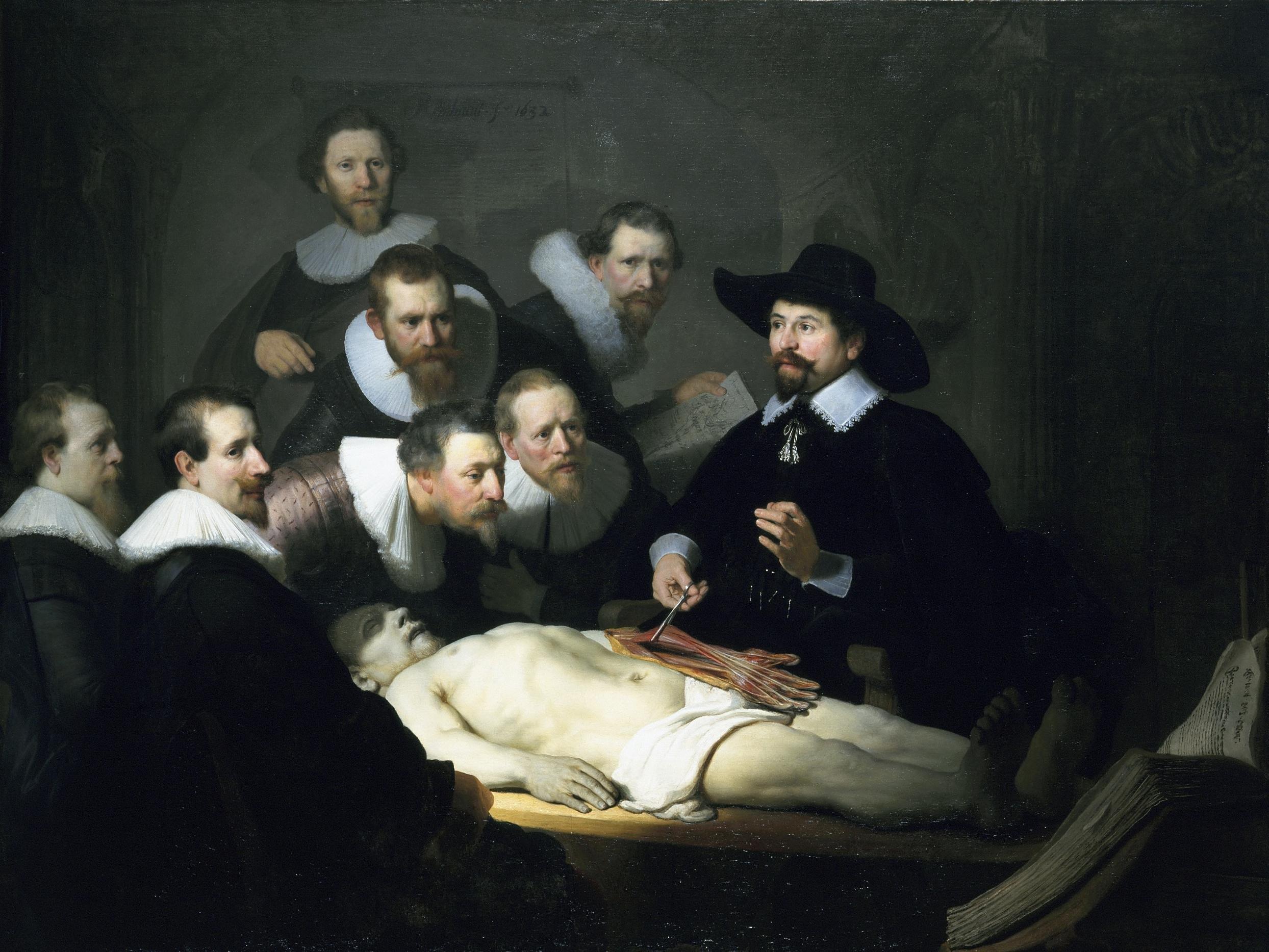
Now, contrast is not only interesting to watch, but is key to storytelling. Look for example at the painting by Rembrandt below, where dark blacks are contrasted with bright light:
Rembrandt: The Anatomy Lesson of Dr. Nicolaes Tulp
We naturally tend to look at the brightest spot. In this case, the brightest spot happens to be the dead man on the table. And this is exactly where Rembrandt wants us to look at; this is what the painting is all about – an anatomy lesson.
Now, there is an infinite number of ways how and where to create contrast. But in this article, we’ll take a look at one specific example in sound design.
Audio Black Hole!
Audio black hole is one of the more subtle, but highly effective sound effects. It involves insertion of a short interval of absolute silence in the audio track just prior to the explosion, gunshot, hit, blast or any other kind of impact. (1)
Needless to say, the most potent sound is the single perfect sound played against silence. (2) This creates not only beautiful contrast and dynamics, but also helps to enhance and accentuate the resulting impact in the mind of the listener.
I prepared a short video to show this sound effect, but before you’ll watch the video, read what sound designers Ben Burtt and Erik Aadahl said in their interview for designingsound.org about this sound effect.
Ben Burtt (Star Wars: Attack of the Clones)
I think back to where that idea might have come to me…I remember in film school a talk I had with an old retired sound editor who said they used to leave a few frames of silence in the track just before a big explosion. In those days they would ‘paint’ out the optical sound with ink. Then I thought of the airlock entry sequence in 2001. I guess the seeds were there for me to nourish when it came to the seismic charges. (1)
Erik Aadahl (Transformers: Revenge of the Fallen)
One of my favorite scenes is the “hut scene”. Sam and Mikaela are hiding out from Decepticons on the hunt. It’s the silence that I like. We tried to get very quiet, so we could hear the terrified kids trying to suppress their breaths and not be heard. We wanted the audience to hold their breaths too. We go as quiet as we can, before Starscream rips the roof off of with a BANG! Dynamics are the key to both storytelling and sound.
It’s fun to make audiences lean in, have them strain to hear something, and then give them a jolt. I like this kind of filmic emotional manipulation, and I think anyone who enjoys a ride on a roller coaster does too. (3)
How about you, do you enjoy the ride on roller coaster?
David Bordwell wrote a brilliant article where he discusses narrative paintings of the late nineteenth century and their influence on early filmmakers. Here is one example from his article:
Two prosperous young women are sitting in a garden. One is reading from a sheet of paper. What’s going on?
Marcus Stone: Her First Love Letter
The title, Her First Love Letter, helps us zero in on specific aspects of the action and fill in the situation. The girl on the left, bathed in light, leaning forward eagerly and wearing the pale frilly dress, can be seen as the more inexperienced of the pair, caught up in the anticipation of the young man’s ardor. The more worldly woman sits relaxed, perhaps a little skeptical but also tolerant of the ways of young love.
[…]
Narrative paintings like this were evidently one source of early cinema’s approach to staging and composition (among many other things, like acting or lighting).
[…]
I’m not arguing that these particular paintings influenced filmmakers, only that the principles that the painters employed were picked up by directors. The more general point is that in understanding film aesthetics, we can usefully compare movies to other movies, and movies to other arts. By doing this, we sharpen our sense of what various media can do. (1)
The painting above is by Marcus Stone and dates from 1889, I love it so much! I did a quick google image search and found another image by Marcus Stone, this one is called “In Love”:



 CINEMA SHOCK