Cinematic composition in Citizen Kane

It is almost impossible to write something new about Citizen Kane, because there were at least quadrillion pages written about this movie already.

One of the recent articles (written by Tim Wilson) deals with extreme depth of field used throughout the movie. I read it just few days ago and thought it would be a great example of cinematic storytelling. What really caught my attention were these words:

Okay, so what’s that mean about cinematic values? For me, it means “composition.” Everything in its place. Maybe the one and only reason that the chair is there is to provide one more layer — but you can tell it’s not there by accident. The shot is COMPOSED. Everything is there by INTENT. Intent and composition are merged, and set at the service of larger storytelling priorities.

So let’s take a look at the cinematic composition described above:

Citizen Kane (1941)
Citizen Kane (1941)

Each character or item creates a layer in the picture. Going from the foreground to the background, we have (for example) these layers:

  • sheet of paper
  • Mrs. Kane
  • Mr. Thatcher
  • Mr. Kane
  • chair
  • window
  • little Kane

This creates cinematic composition. I already tried to define what does the word cinematic mean, so just briefly, cinematic shot/composition is achieved by – literally – adding layers.

From the cinematography point of view, the layers are achieved through careful blocking (staging) of actors and props (chair) and by using large depth of field (=small aperture).

But also from the storytelling perspective, there are layers. While the parents are making decision about little Kane’s future, we can see him as a kid playing cheerfully outside in the snow.

That’s why this shot is very cinematic, it’s literally full of layers.

Links:

Depth of Field: Gregg Toland, Citizen Kane and Beyond
A Viewer’s Companion to ‘Citizen Kane’
The Motion Picture Cameraman
Framing and composition in short The Division Of Gravity

Other Examples:

Charlie's Family Restaurant by Andrew Mohrer
Charlie’s Family Restaurant by Andrew Mohrer

Look at the photo by DJ Poe. It’s amazing how many layers there are in the shot. Very cinematic composition!

Poetry and Symmetry of Storytelling in Toy Story 3

I’ve watched recently Toy Story 3, but this time with audio commentary by director Lee Unkrich and producer Darla Anderson. This blog post was inspired by their commentary and draws heavily from it.

With movies, it’s all about setting it up and paying it off consistently, to create this poetry and symmetry of storytelling.

Saying goodbye is never easy, especially to someone who you’ve known for a long time, some you’ve loved or just deeply cared about.

There is a scene, when Woody is leaving the toys. It gets very emotional, because they have been together for so many years. They get into argument. Both sides have to say things and they are not very nice. It’s a messy break up, because when Buzz extends his hand to Woody, he refuses to shake it.

Toy Story 3 (2010)
Toy Story 3 (2010)

Later in the movie, there is a scene, where the toys are taken to the dump. It’s the biggest fear of a toy. It’s not like getting thrown away or being outgrown by a kid, because that’s not the end of a toy. But heading into inferno of incinerator, that’s the ultimate end.

The toys are trying to climb up the trash, but they very quickly realize, that this is not an option. They are falling into the incinerator and slowly sliding toward their doom. There is no way out, no option, this place is inescapable.

So there is this wonderful and extremely emotional moment, when all toys come together as a family. Buzz reaches out to Woody and this time, he accepts his hand without hesitation. This moment intentionally mirrors the earlier scene, where Woody refused to shake Buzz’s hand. They all hold hands, they bond as a family, close their eyes and face together their doom.

Toy Story 3 (2010)
Toy Story 3 (2010)

It’s extremely emotional, because now we have this “family reunion” to contrast the messy break up in the earlier scene. This is what Darla Anderson meant by “setting it up and paying it off”.

The incinerator scene is extremely emotional even if you only look at the still frames above. It’s not just about creating the symmetry of storytelling (setting it up and paying it off). It works so well, because there are additional layers of meaning.

The toys realized in this scene, that the most important thing is that they have each other… is there anything more important?

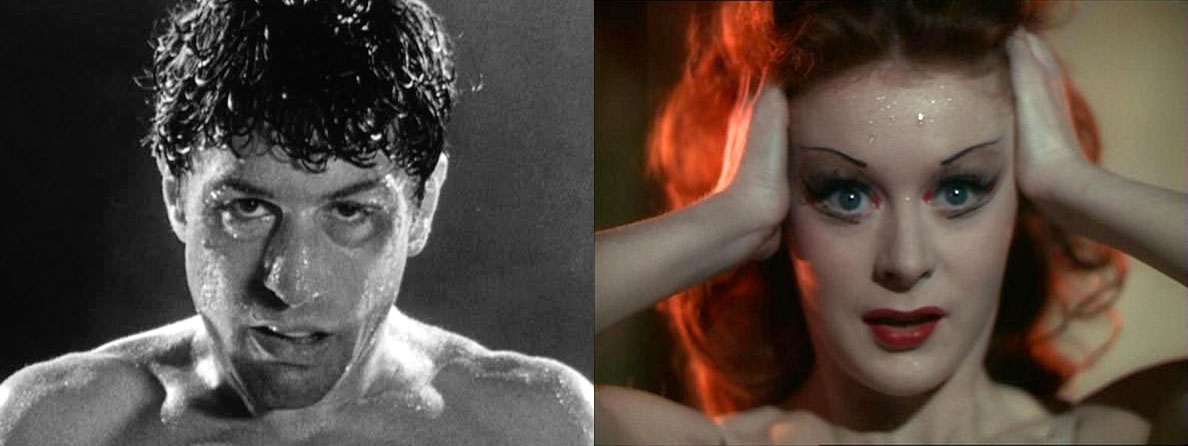
Inside the head of Jake La Motta and Victoria Page

The standard way of shooting a ballet scene, up until 1948, would be to photograph the dancers from head to toe. However, Red Shoes – photographed by Jack Cardiff – completely changed this. The movie is photographed in such a way, that we’ll see what goes on inside the dancer’s head – we are shown what they see(=their POV). (And there is nothing better than POV when it comes to sound design, but wait! 🙂 )

Few years later, Martin Scorsese applied this in boxing scenes in Raging Bull. If you pay attention, you’ll notice, that the camera stays always inside the ring. Watch the video below to see a comparison of ballet and boxing scenes in Red Shoes and Raging Bull (taken from the documentary Cameraman: The Life and Work of Jack Cardiff):

The similarity is clearly visible. But Martin Scorsese took this concept even further.

POV and Sound Design

The POV shots are amazing opportunity for sound designers – the POV gets us inside the head of the character. That means, that we see what they see, but also hear what they hear! And this is extremely exciting, because you can, as a sound designer, play with the sounds what they hear. Being inside the head of the character gives you license to distort and manipulate the sounds.

Frank Warner, the sound designer of Raging Bull, created whole library of sound effects, that you’ll hear during the boxing scenes. These include: Smashed watermelon and tomatoes, animal like noises, gunshots(these were used for the sound of camera flash bulbs going off) and many others. (Sound mix for Raging Bull took six months!)

I can only guess, what sound effects were used in the boxing scenes, but the truth is, that even Martin Scorsese doesn’t know. Frank Warner was so protective about his sound effects, that he destroyed them later, so nobody else could use them again.

Anyway, POV shots are brilliant for sound design. Especially for self-destructing characters like Jake La Motta.

Plus, the boxing ring in itself creates an attractive environment for sound design. I think everyone would be interesting in terms of sound design when standing inside the boxing ring, not just Jake La Motta. In boxing ring, you just see and hear differently, trust me.

In January 2012, I wrote a post about POV and sound design, you can read it by clicking here.

Links:

Cameraman: The Life and Work of Jack Cardiff