Visual accident in In Cold Blood

Let me start this article by a great quote by Scott Adams:

Creativity is allowing yourself to make mistakes. Art is knowing which ones to keep.

If you work in some creative field, you know that mistakes happen from time to time. Well, I like to call them happy accidents. One of the best examples I can think of in music is Cher’s ‘Believe’. The vocal effect that is on the record is basically a happy accident resulting from experimentation with vocoding and filtering.

Here is a historical footnote from Sound on Sound article (originally published in February 1999):

It was the first commercial recording to feature the audible side-effects of Antares Auto-tune software used as a deliberate creative effect. The (now) highly recognizable tonal mangling occurs when the pitch correction speed is set too fast for the audio that it is processing and it became one of the most over-used production effects of the following years.

However, the happy accident is not enough to make a monster hit record like Cher’s ‘Believe’. It’s just a starting point. So the reason why the record sounds so great is that the producers (Mark Taylor and Brian Rawling) used it very creatively – they applied the vocoded sections only to parts where they had the most striking effect and not to the whole vocal track. Overall, it was very painstaking process, but well worth it – Cher was amazed!

This blog is focused on the art of cinematic storytelling, so I won’t write more about recording process of Cher’s song, since this was supposed to be only a short introduction to happy accidents, but if you are interested in music, sound design or just curious, I totally recommend reading the whole article at soundonsound.com, where you’ll learn more about the recording process of Cher’s ‘Believe’.

Now, back to the art of cinematic storytelling! Today’s article deals with a purely visual accident that happened in one of the last scenes in In Cold Blood.

The scene in question is when Perry Smith (played by Robert Blake) is about to be hanged at the end of the movie. It’s very sad and you do feel sorry for him, even though he committed such brutal crime.

The whole scene was shot on stage – they made an artificial rain and they also had a fan to the side, which was blowing the spray from the rain against the window.

When they were rehearsing the scene, Conrad L. Hall (cinematographer responsible for such great movies like Butch Cassidy and the Sundance Kid, Cool Hand Luke or American Beauty) noticed a very interesting light effect that happened once on Perry’s face. He loved it immediately.

After the discovery, they changed the blocking (staging) so that the light effect would stay on Perry’s face all the time.

As the water is running down and light hitting his face through that window, it seems like he is crying. It makes the scene extremely emotional and hard to watch. He talks about his father, how he hates him and loves him at the same time. He is not crying, but the visuals are crying for him. I think this has to be one of the most beautiful examples of cinematic storytelling.

And the best part about it is that it was “just” a visual (happy) accident, it wasn’t planned at all!

Now, there are other examples of rain running down on window used for similar purposes. One of them is a scene in Toy Story 3. In this case it wasn’t an accident probably, because Pixar storyboards everything very carefully. Nevertheless, it is still a beautiful example of cinematic storytelling.

Toy Story 3 - Lotso
Toy Story 3 – Lotso

The picture above was taken from a scene, where Lotso learns, that he was replaced by another toy. Even though he is not crying, the visuals tell everything!

I usually have problem with the last sentence in my blog posts, what to write, how to finish, but here it is easy: Make mistakes, use your tools in unusual ways, think outside the box, look for happy accidents and who knows – maybe one day you’ll make a monster hit record or an unforgettable movie scene!

Links

Other Examples

Team America - Gary Johnston
Team America – Gary Johnston

Camera angles in American Beauty

American Beauty is one those rare movies you can watch again and again and still find something new every time you watch it. Not a single word, sound, body movement, edit or camera setup is wasted opportunity to tell a story of a man going through a life change. There is intent, purpose and deeper meaning behind everything.

In this article, we’ll look at camera angles that help to portray the change of Lester Burnham, who, from a gigantic loser, becomes a man in control over his life.

Camera Angles

Camera angles do basically two things – they show someone’s:

  • power (and/or)
  • status

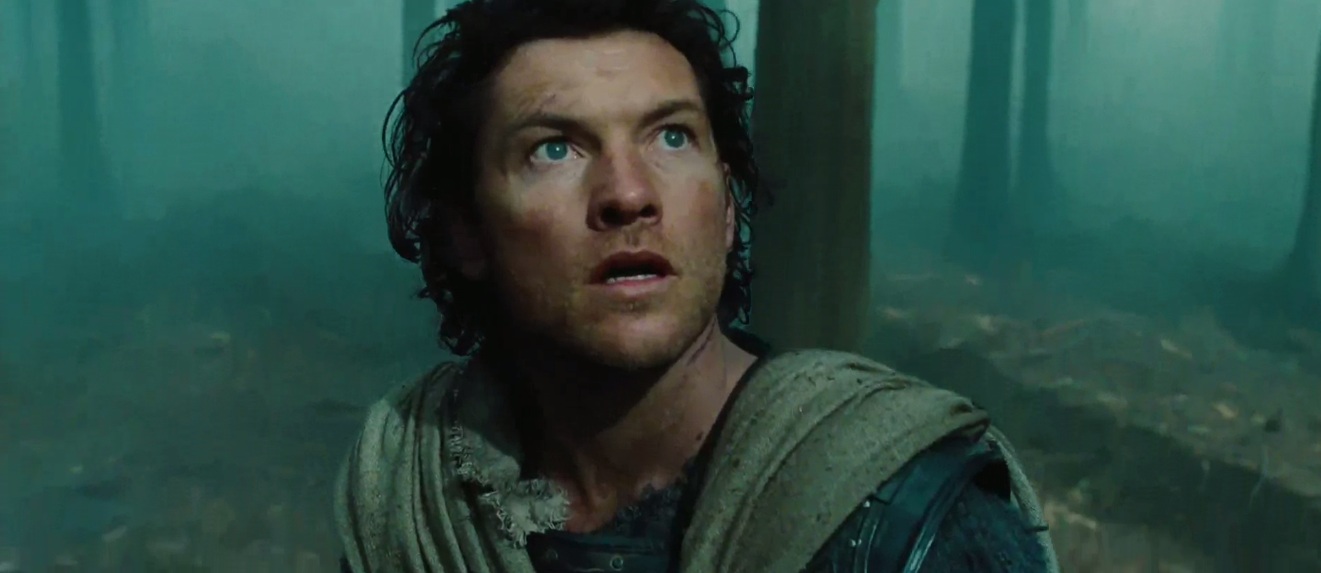
Now, let’s look what these angles generally do on the emotional and psychological level (the following three picture are print screens from Clash of the Titans 2 trailer):

High angle

 Clash of the Titans 2 (2012)
Clash of the Titans 2 (2012)

High angle shot reduces the height of a character; this makes the character seem smaller and inferior. It seems like the character is belittled, looked down upon, helpless and insignificant.

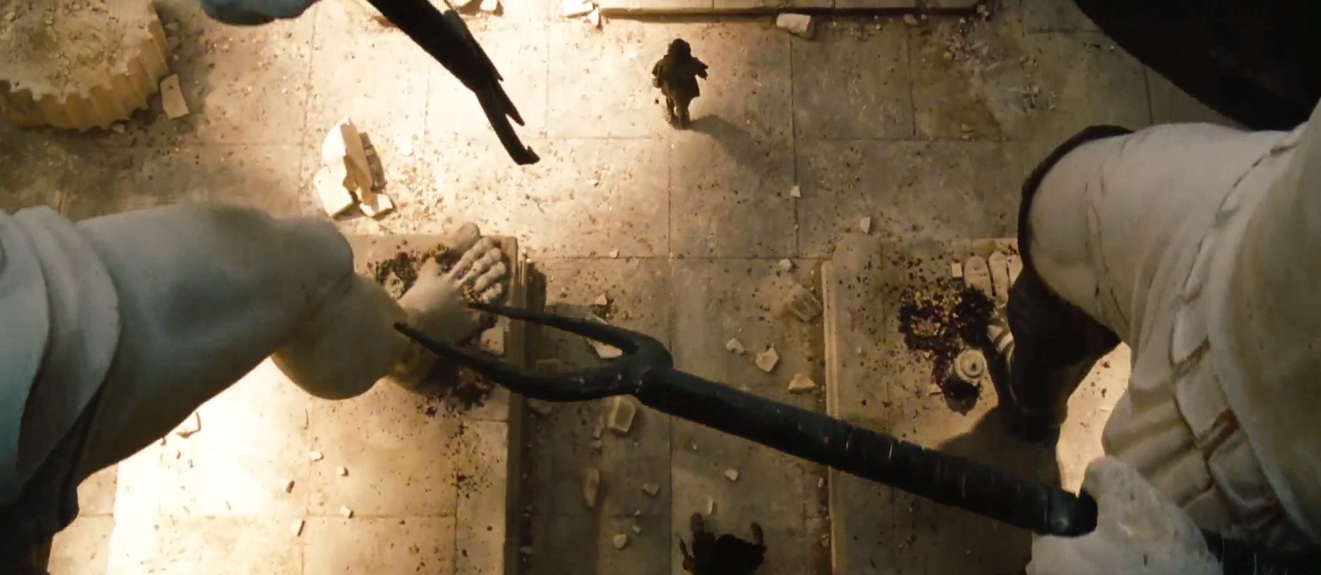
Low angle

 Clash of the Titans 2 (2012)
Clash of the Titans 2 (2012)

Characters viewed from low angle seem to be superior, dominant, bigger, powerful or ominous. Low camera angle gives them a symbol of authority and respect.

High and low angles work also on the emotional level – the audience tends to (most of the time) identify with the inferior character, that is, the one viewed from high angle.

 Clash of the Titans 2 (2012)
Clash of the Titans 2 (2012)

However, it is important to mention, that this works only when the camera is placed around the eye level. You could place the camera on the ceiling to get high angle (or on the floor to get a low angle), but this would be perceived as a creative camera placement, rather than portrayal of someone’s status or power.

American Beauty – examples

So let’s start from the beginning, I’ll show you pairs of opposite pictures and hopefully, you’ll be able to tell, who dominates the story at that point:


Lester starts to be in control over his life…

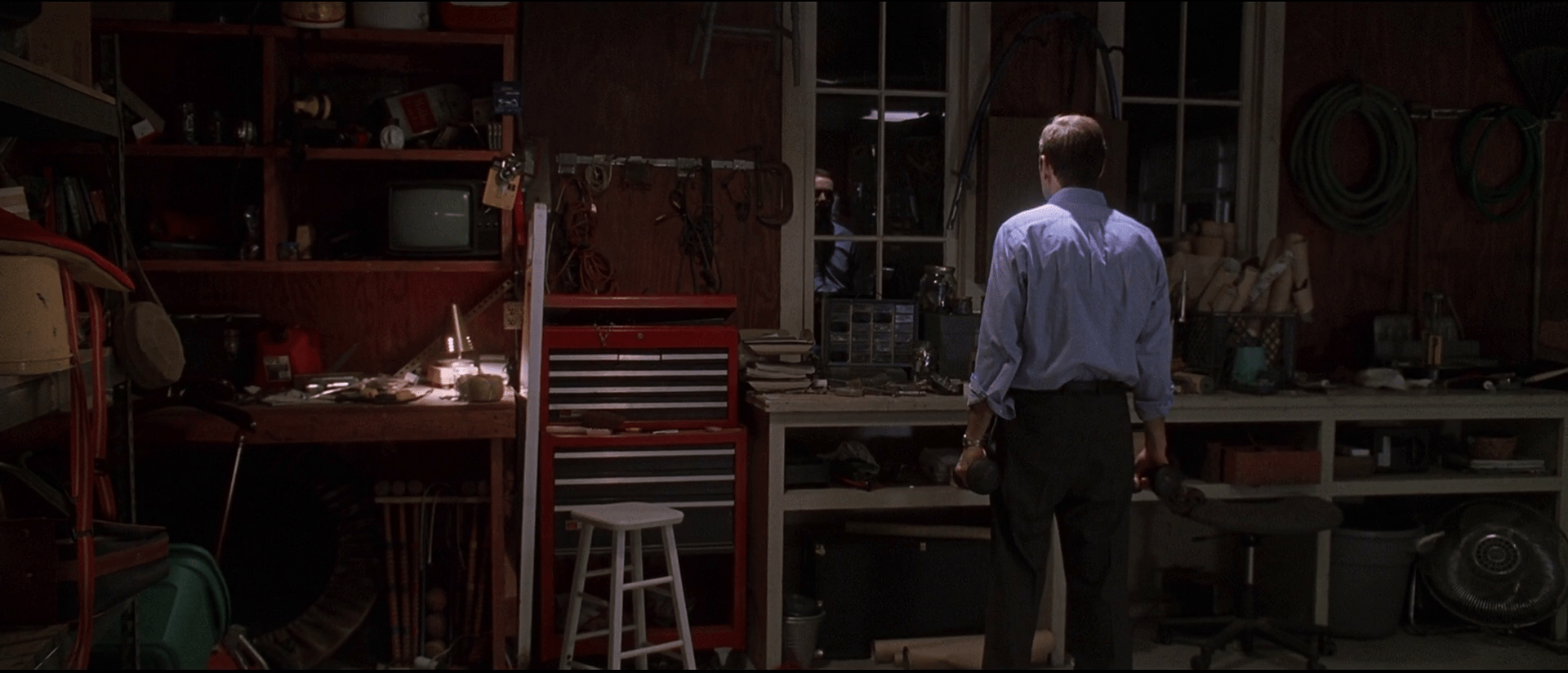
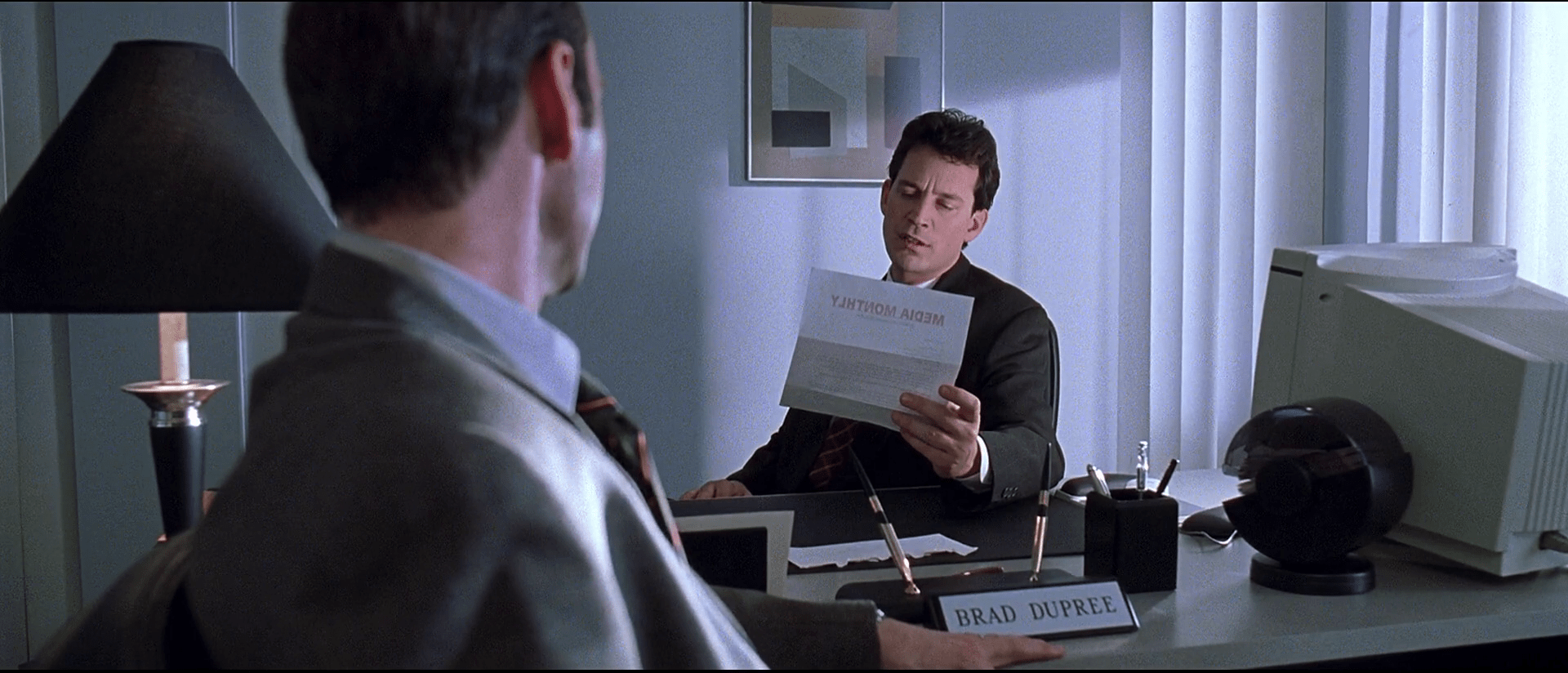
American Beauty (1999)

…and guess what happened… 🙂

American Beauty (1999)

This change is also nicely portrayed and documented in body language of Lester Burnham – thanks to amazing performance by Kevin Spacey!

Don’t waste opportunities to say something

Today’s example of cinematic storytelling comes directly from Film Crit Hulk. The CAPS LOCK below is intentional, it’s the way the Film Crit Hulk writes his essays. His writing is absolutely brilliant! If you haven’t heard about him, I recommend to visit his wordpress blog. Anyway, here is a sample of his writing, which comes from his masterpiece Screenwriting 101 Vol. 2 of 2.


Chinatown (1974)
Chinatown (1974)
Chinatown (1974)
Chinatown (1974)


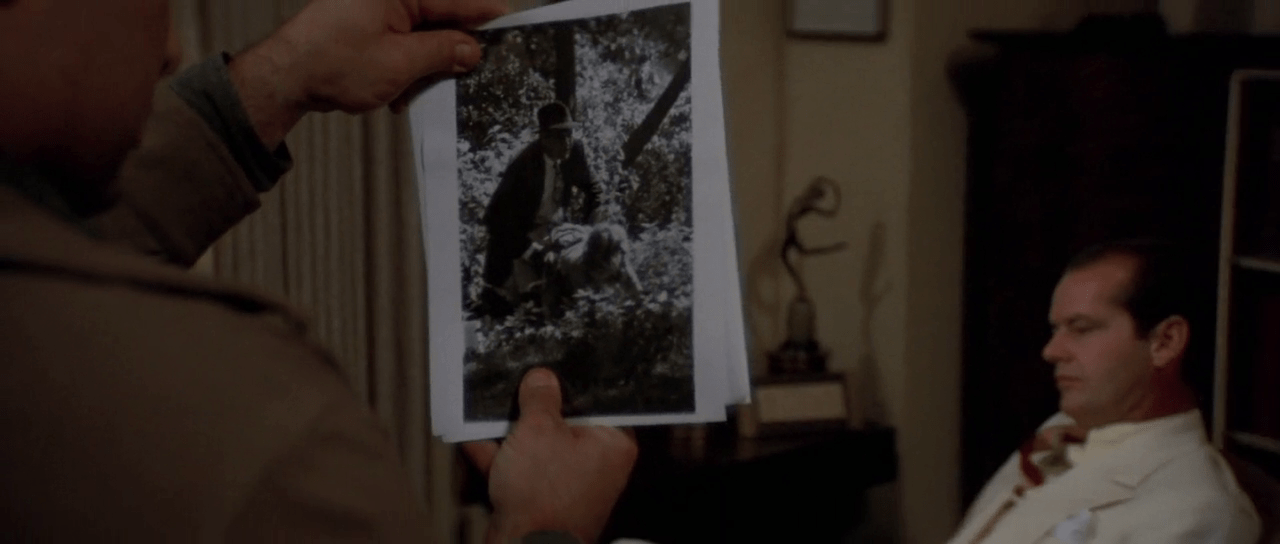
IN ROBERT TOWNE’S INCREDIBLE SCRIPT FOR CHINATOWN (THOUGH HE ISN’T AFRAID TO GO ON FOR BIG WALLS OF TEXT… IT WAS A DIFFERENT ERA) THERE IS THIS REALLY NEAT LITTLE DETAIL THAT EXEMPLIFIES SOMETHING THAT DOESN’T HAPPEN ENOUGH IN SCREENWRITING.

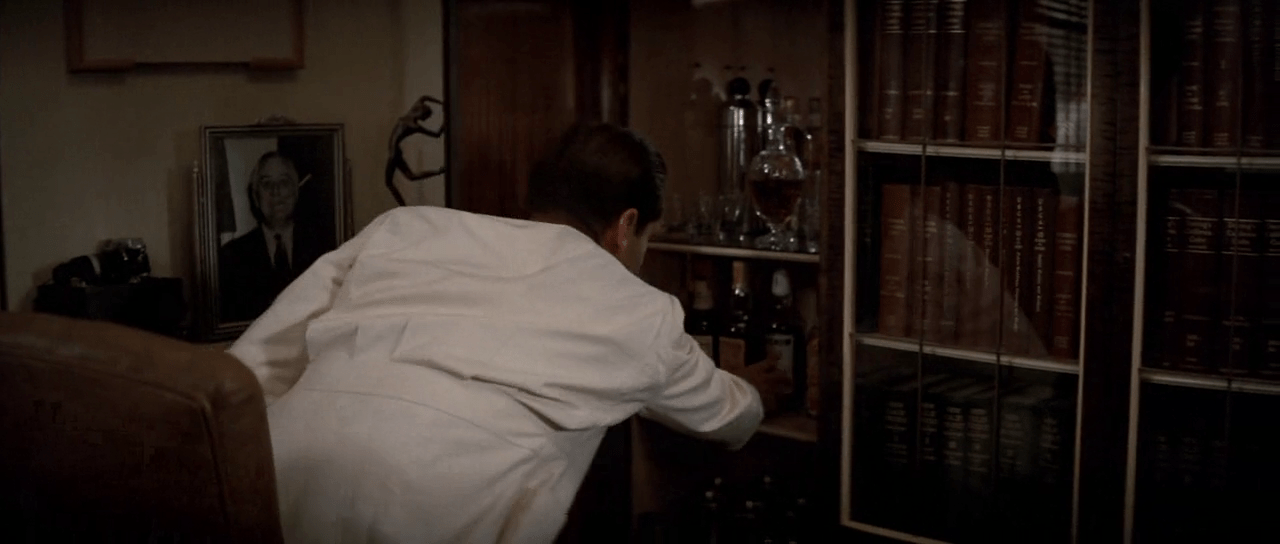
JAKE GITTES IS A PRIVATE DETECTIVE WHO HAS JUST INFORMED ONE OF HIS CLIENTS THAT, YES, HIS WIFE IS CHEATING ON HIM. TO CONSOLE THE POOR CHAP JAKE DOES THE FOLLOWING:

“Gittes reaches into his desk and pulls out a shot glass, quickly selects a cheaper bottle of bourbon from several fifths of more expensive whiskeys.”

THE IMPLICATION OF THIS MAY SEEM OBVIOUS, THAT GITTES IS “CHEAP” OR SOMETHING, BUT THE FACT THAT HE HAS THEM ALL LINED UP AND READY TO GO IN HIS OFFICE SAYS SOMETHING ELSE… IT IMPLIES THAT JAKE KNOWS THE CLIENTWON’T KNOW THE DIFFERENCE.

WHAT MAY SEEM LIKE A SMALL DETAIL IN THE SCRIPT IS ACTUALLY A DETAIL THAT CAN BE SUSSED OUT TO SEVERAL OTHER IMPLICATIONS. IT’S A BRILLIANT LITTLE GESTURE OF WHICH TOWNE IS A MASTER. REALLY, HULK READ A SHIT TON OF SCRIPTS AND THESE OPPORTUNITIES ARE RARELY EXPLORED. SO HULK WANT YOU TO EMBRACE THE KIND OF HIGH-DEGREE STORYTELLING EVIDENT IN THESE TINY DETAILS. EMBRACE THE HIGH STANDARD. ALWAYS TRY TO ALWAYS SAY SOMETHING. EVEN TRY TO SAY MULTIPLE THINGS AT ONCE.

EVERY DETAIL IN YOUR SCRIPT CAN MATTER IF YOU REALLY WANT IT TO. DON’T WASTE OPPORTUNITIES TO SAY SOMETHING!


I want you the read the last sentence again!!

ALWAYS TRY TO ALWAYS SAY SOMETHING. EVEN TRY TO SAY MULTIPLE THINGS AT ONCE.

Saying multiple things at once…does it sound familiar? I hope so! 🙂

Links

Screenwriting 101 Vol. 2 of 2
THE COMPLETE FILM CRIT HULK ARCHIVE
Chinatown Screenplay – First Page PDF