Cinematic dialogue in Sideways: Words with subtext

In the previous post, I wrote about what does the word cinematic mean to me. If we apply it to the dialogue, than we are talking about subtext.

Speaking with subtext is a great way how to talk about difficult or delicate topics, like the first sexual experience between you and your partner. You almost never talk directly in this situation, you don’t say out loud what you really mean or want. Speaking with subtext in this case is great – for several reasons: It’s fun, it’s romantic and it leaves the other person with certain space for his/her imagination and fantasy.

Talking about subtext reminds me of a screenwriting book by Xander Bennett, here is an excerpt from the book:

“If you can say the same thing with subtext, use subtext instead. Better yet, see if you can achieve the same effect using action instead of dialog. Screenwriter Scott Myers likes to talk about the scene in Sideways where the protagonist and the romantic lead are talking about their favorite wines…except that, no, they are not. “requires constant care and attention”, “fragile and delicate”, “constantly evolving” – they are actually spilling their guts about how they see themselves. It’s a beautiful scene. But what if they had really been talking about themselves, without the “buffer zone” of wine to create some emotional distance? It would have been awkward, simplistic, and on-the-nose.”

I won’t write about what the movie is about, because others already did, so I’ll leave you this time with a script excerpt from the movie, with the dialogue scene Xander Bennett was talking about.

The wine dialogue scene:

MAYA
Can I ask you a personal question?

MILES
Sure.

MAYA
Why are you so into Pinot? It’s like a thing with you.

MILES
I don’t know. It’s a hard grape to grow. As you know. It’s thin-skinned, temperamental, ripens early. It’s not a survivor like Cabernet that can grow anywhere and thrive even when neglected. Pinot needs constant care and attention and in fact can only grow in specific little tucked-away corners of the world. And only the most patient and nurturing growers can do it really, can tap into Pinot’s most fragile, delicate qualities. Only when someone has taken the time to truly understand its potential can Pinot be coaxed into its fullest expression. And when that happens, its flavors are the most haunting and brilliant and subtle and thrilling and ancient on the planet. MILES   I mean, Cabernets can be powerful and exalting, but they seem prosaic to me for some reason. By comparison. How about you?

MAYA
What about me?

MILES
I don’t know. Why are you into wine?

MAYA
I suppose I got really into wine originally through my ex-husband. He had a big, kind of show-off cellar. But then I found out that I have a really sharp palate, and the more I drank, the more I liked what it made me think about.

MILES
Yeah? Like what?

MAYA
Like what a fraud he was.

MAYA
No, but I do like to think about the life of wine, how it’s a living thing. I like to think about what was going on the year the grapes were growing, how the sun was shining that summer or if it rained… what the weather was like. I think about all those people who tended and picked the grapes, and if it’s an old wine, how many of them must be dead by now. I love how wine continues to evolve, how every time I open a bottle it’s going to taste different than if I had opened it on any other day. Because a bottle of wine is actually alive — it’s constantly evolving and gaining complexity. That is, until it peaks — like your ’61 — and begins its steady, inevitable decline. And it tastes so fucking good.

How do you define the word cinematic?

“The truth is the best stuff evolves when I don’t really think about it. The good ones just come naturally…” [Andrew Mohrer]

Downpour by Andrew Mohrer

Few weeks ago I received through email inspiration several photos by Dj Poe (Andrew Mohrer, New York based photographer). And I was absolutely amazed. Usually, I move the emails right away to my email inspiration folder, but not this one. I couldn’t stop looking at the pictures. They were absolutely stunning, they looked like they were taken from a movie! In other words, they felt really cinematic.

Recently I was wondering, how would you actually define the word cinematic? (I guess I should know, since I’m writing a blog about cinematic storytelling.) So I decided to go back to that email and tried to answer, what does the word cinematic really mean to me.

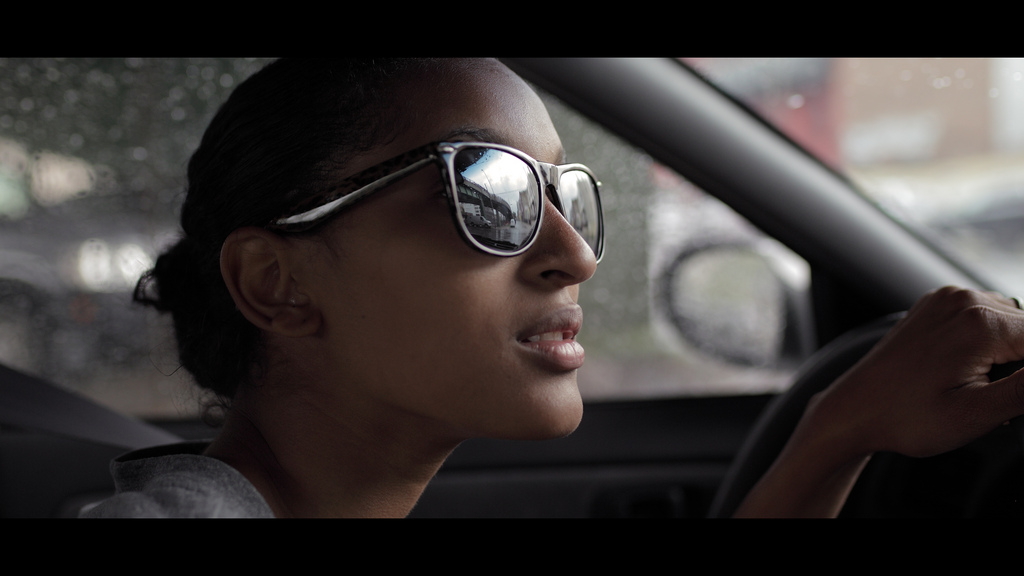
Vanessa by Andrew Mohrer

Looking at the picture above, we can see that there is a shallow depth of field, the image has widescreen aspect ratio (plus the black bars at the top and bottom), the colors are desaturated, the lighting is great and the composition is perfect as well.

The problem is that you can find thousands of pictures  like this on the internet, books or magazines with shallow depth of filed, desaturated colors etc. And yet, most of them won’t feel cinematic at all.

So what I think makes the photos by Dj Poe really cinematic is their ability to make you ask questions. The most obvious question in this case would be:  Where is she looking at and why? You can come up certainly with many other more or less relevant questions like:

  • What car is she driving?
  • Is it her car? Is she a driver by occupation?
  • Is she waiting at a crossroad for a green light?
  • Is she waiting for someone?
  • What is going to happen next etc.?

But the point here is not what kind of questions makes the image ask you, but the fact itself, that it DOES make you ask those questions.

Making the viewer ask questions is a very powerful cinematic technique, because it makes the viewer involved, and that happens when there is a certain kind of mystery, a space for your (viewer) interpretation.

That’s the difference between evening news (basically random shots, no need for interpretation) and movies by Stanley Kubrick (every shot is a very well composed shot with layers of meaning).

What I think is great about this definition of the word cinematic, that is

  • adding additional layers of meaning
  • making viewer involved by asking questions
  • ability to create a story in viewer’s mind

is that it’s applicable not only to photos, but to music, visual effects, sound design, you name it. The point is: Great art poses questions. So leave a space for an interpretation of your work, would you? 🙂


Jun 11, 2012

Andrew actually read this article, look what he wrote under one of his photos Caught The Eye.

Jun 17, 2012

Stu Maschwitz mentioned today in his tweet link to his article that he wrote back in 2009: Fact, Moment, Light. I read it today and it’s brilliant!

The fact, moment and light are 3 zones he thinks about when taking a photo. He firstly describes each zone individually and then concludes, that best photos occupy the intersection of all three zones. At the end, he shows an example of such photo (FML shot).

FML shot by Stu Maschwitz

But here comes the best part! Not only it is a FML shot, but it made Stu ask questions!

  • Is that a joint in his hand?
  • Is it so important that he keep it lit that he’s tied a lighter to his wrist?
  • What do those tattoos say? Caution tape?

Read the whole article by Stu by clicking here.

Dreamy world in (500) Days of Summer

Being in love is beautiful. When it happens, you just know it. Everything changes around you – to be more precise, you perception of things around you changes.

When you meet your dream girl (boy), you enter a new, imaginary world, where everything is possible, a world without any limits or barriers. Living in this world is great – it’s an endless source of inspiration, motivation and energy.

In this example, we’ll look at how sound effects were used, to create this gorgeous world.

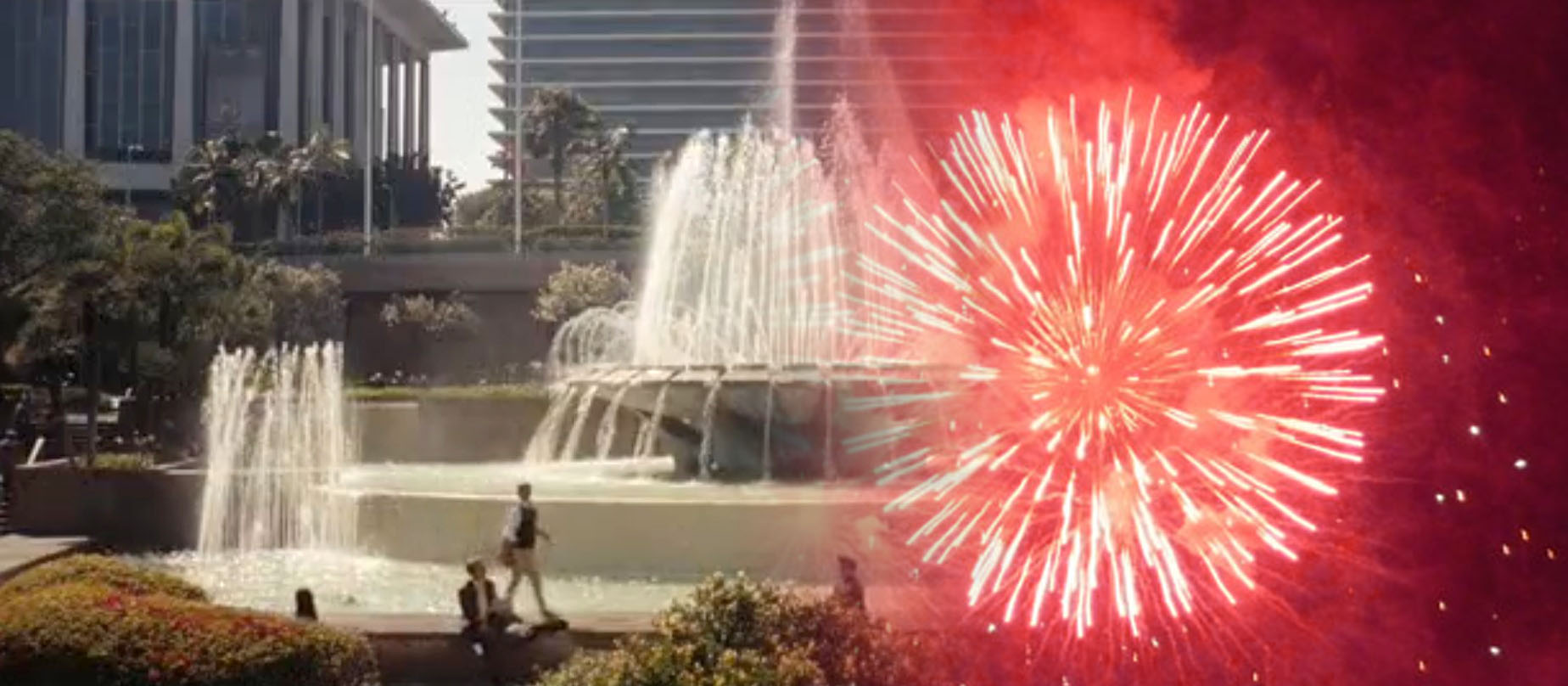
When Tom walks by the water fountain (youtube video above at 0:26), instead of hearing the sounds of splashing water, we hear sounds of fireworks.  What a beautiful touch in terms of sound design!

The sounds of fireworks portray, how Tom perceives the world around him (hears what he wants to hear) and at the same time, visually it also makes sense – the water fires up, same as the fireworks do. Hopefully, you can see everything more clearly in the picture below:

(500) Days of Summer (2009)

However, you can’t live in this beautiful world forever. Someday, you have to leave. Needless to say, the leaving really hurts, a lot. The good thing about it though is that you’ll learn probably one of the most important lessons in your life…

“The movie’s conclusion hinges on Tom realizing that he can’t impose his expectations on her, and that adult relationships are about accepting people as they actually are, not how they’re fantasized to be, a place he can’t arrive to if he doesn’t begin by considering her as a unicorn.” [David Greenwald]

Read more:

GITS Script Reading and Analysis Series: “(500) Days of Summer”