Symbolism of rain

The Shawshank Redemption (1994)

When I write an article, I tend to skip the parts you’d skip anyway, that means that my blog posts are usually between 300 to 500 words long. But this time, I have to make it even shorter – I’m currently preparing for state exams (leaving exams from my university – I have to re-learn basically everything from the past 3 years) and I’m running out of time.

Anyway, I was reading through some crappy economical theories and just couldn’t take it anymore, so I decided to give myself a short 15 minute break. I went to TV and tuned the MGM channel, and from 15 minute break was suddenly 2 hour long break. The movie I watched was gangster drama Hoodlum (1997). Firstly, I was really angry at myself, that I was watching TV for 2 hours, when state exams are so close, but now I feel little bit better about it, because the final scene gave me the idea behind this article. So let’s cut to the chase!

Hoodlum

The final scene takes place in a church. Our main character – Bumpy Johnson (Laurence Fishburne) came to say last goodbye to his cousin Illinois Gordon (Chi McBride), who was brutally murdered.

Hoodlum (1997)
Hoodlum (1997)

Then he goes outside,

Hoodlum (1997)
Hoodlum (1997)

and stands in the rain.

Hoodlum (1997)
Hoodlum (1997)

I thought this was really powerful and emotional scene. During the movie, Bumpy says to his girlfriend Francine (Vanessa Williams): “I told you Francine, Good Lord and I have an arrangement, I don’t go to his house, he doesn’t come to mine.”

But now, Bumpy did visit the church and finally found peace inside him (and trust me, his cousin Illinois was not the main reason he came there – other people very close to him died as well and he didn’t go to their funeral).

However, what makes the scene (the final shot) really powerful is the presence of rain: It acts as a symbol of forgiveness and redemption. Also, during the gang war, lot of young and innocent people were killed, so the rain metaphorically cleans his hands from blood and gives a new life to him (I believe he’s changed). Obviously, I could rant about symbolism of rain for much longer, but I think what was important was (hopefully) said already by now.

Shawshank Redemption

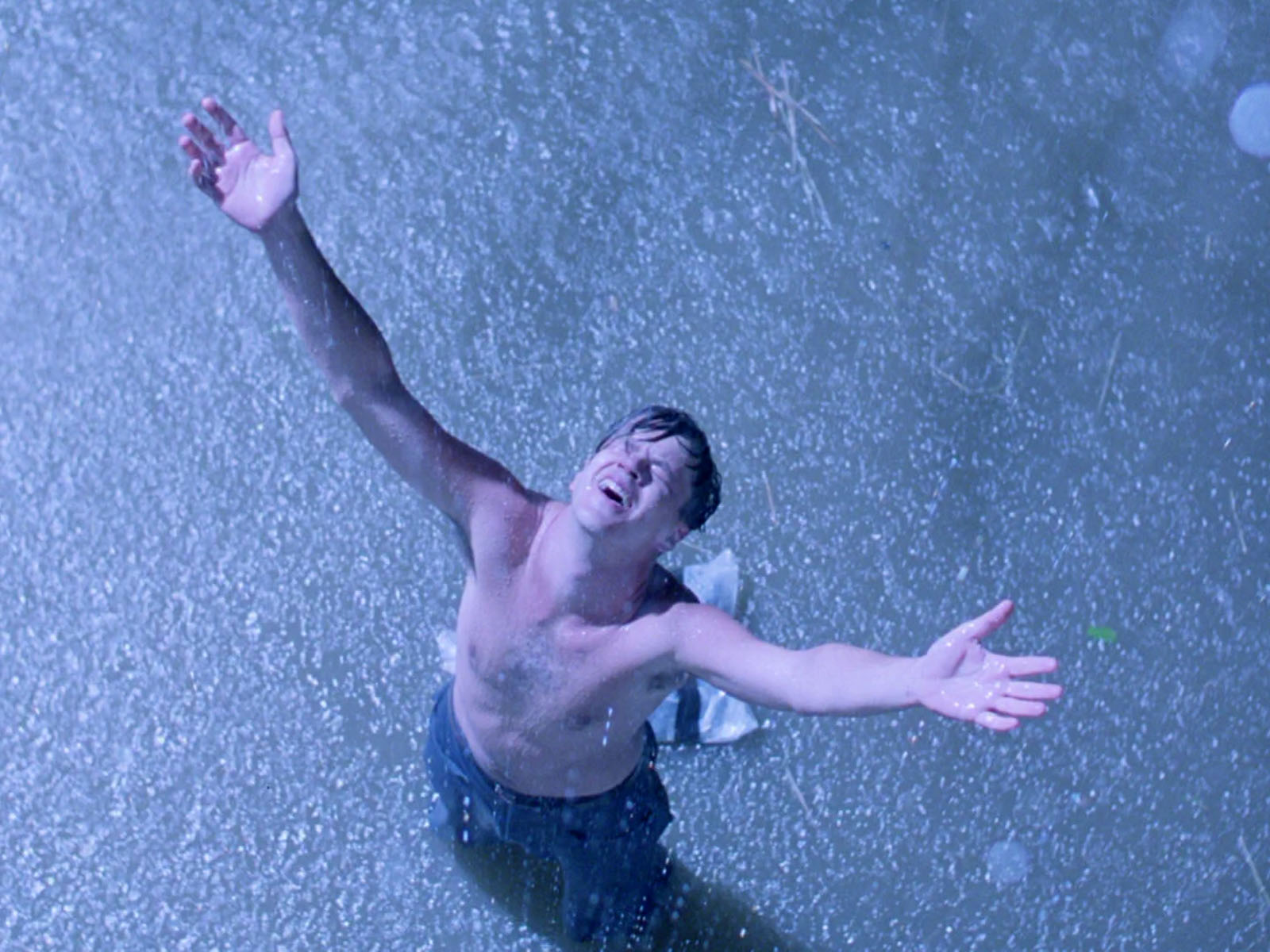
Another great example of rain scene is Shawshank Redemption (1994). I’ve never thought about it before, but after Hoodlum, I realized, that the rain served here to very similar purpose.

Andy (Tim Robbins) was innocent from the beginning, he didn’t kill his wife, but he felt responsible for her death, he felt guilty and that’s why he accepted the prison. During his stay there, he was helping others -this way, he was seeking his redemption. And he finally found it.

So when he escapes through the sewage tunnels, the rain cleans him both physically as well as metaphorically. It’s such a powerful scene! Also, the rain symbolizes freedom (you won’t probably experience the rain in the prison). And speaking about freedom, do you remember the very last shot from the movie? Doesn’t the ocean symbolize freedom as well…?

The Shawshank Redemption (1994)

If I’ll ever create my top 10 examples of cinematic storytelling, the Shawshank Redemption rain scene is going to be definitely a hot candidate!


P.S. I think, that the Korean expression for the word “clean” is actually composed from two characters: First one meaning “young” and second one “water“. Can anybody speaking the Korean language please confirm that? Soy?
Vertigo shot

We can define Vertigo shot (also known as dolly zoom) as a movement of camera on dolly while changing the focal length of the lens. In other words, moving the camera physically away or towards the subject (“dollying”) while zooming in or out (changing the focal length of lens).

I made a short animation, which hopefully clearly shows the difference between:

  • Change in focal length (zooming in)
  • moving the camera physically away from the subject (“dollying out”) and
  • what happens, when these two techniques are combined (=dolly zoom).

When “dollying out” and zooming in, the size of red figure stays relatively the same, but the background changes dramatically. This is very unsettling, because our eyes are not used to this. The reason for that is that with our eyes, we can perform only the dolly part of the move, that is, physically moving away or towards the subject, but we can’t zoom with our eyes (wished we could 🙂 ).

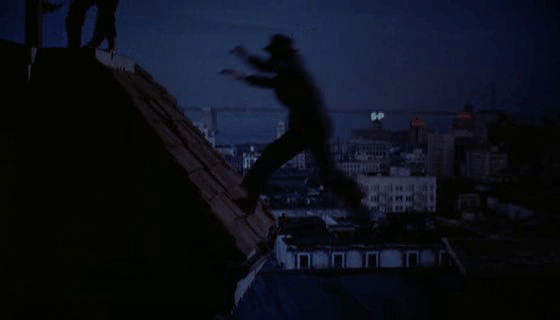
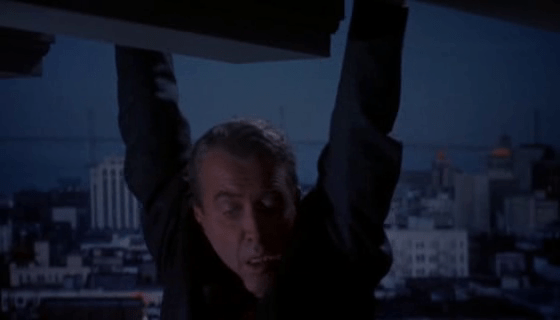
Anyway, this technique was firstly used, I believe, by Alfred Hitchcock in his film Vertigo. And it was used in such a way, that it helps to tell the story. The movie starts by a chase on roof tops, and it is here, when we learn, that one of the main characters, detective Ferguson (James Stewart), suffers from acrophobia (fear of heights). Here is the scene:

He jumps from one roof to another,

Vertigo (1958)
Vertigo (1958)

but slippers and almost falls down.

Vertigo (1958)
Vertigo (1958)

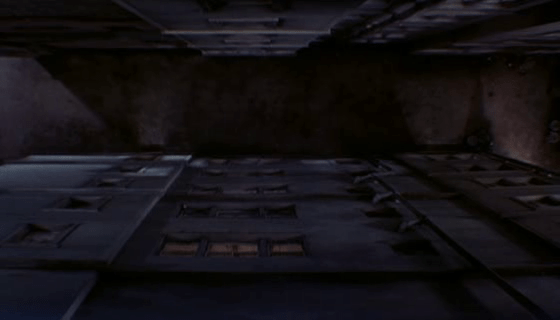
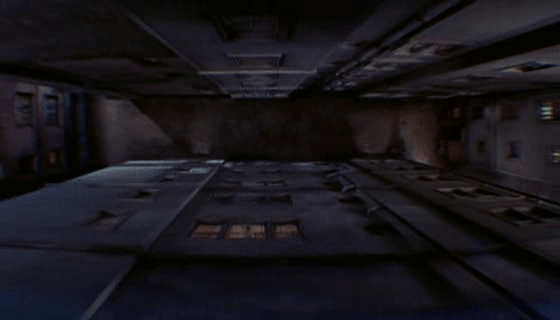
When he looks down, he gets dizzy/vertigo. Here uses Alfred Hitchcock the dolly zoom technique for the first time in the movie – he shows detective Ferguson’s fear of heights and how he feels.

Vertigo (1958)
Vertigo (1958)
Vertigo (1958)
Vertigo (1958)

The foreground stays relatively the same (top and bottom of the frame), but the background (middle of the frame – ground) changes dramatically.

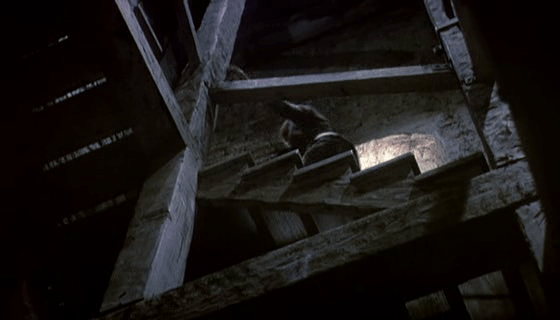
The dolly zoom technique gets used again in a scene, where detective Ferguson is chasing Madeleine (Kim Novak) on old wood staircase.

Vertigo (1958)
Vertigo (1958)

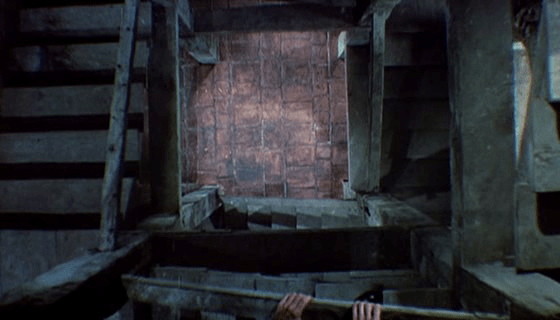
In the middle of the staircase, he looks down an gets dizzy/vertigo again.

Vertigo (1958)
Vertigo (1958)
Vertigo (1958)
Vertigo (1958)

Again, the foreground (his hands) stays relatively the same in size, while the background (floor of the tower) changes dramatically in size.

When I saw the movie for the first time, I didn’t know anything about zooming, or “dollying”, but I remember, that I could feel his (detective Ferguson’s) fear of heights in this scene. Watch the whole scene in the video below:

Vertigo is, to my knowledge, the first movie where this technique was used (as a storytelling device), but it is certainly not the only one. As I became aware of this technique, I started noticing it in other movies as well. It is usually used to:

  • show character’s physical/mental condition
  • depict change in her life, or
  • when she realizes something
  • when she finds herself in danger

Do you know about any other examples? Let me know down in the comments. 😉

Useful links:

The “Vertigo shot” and the oneiric narrative

Color palette in The Incredibles

moviebarcode.tumblr.com

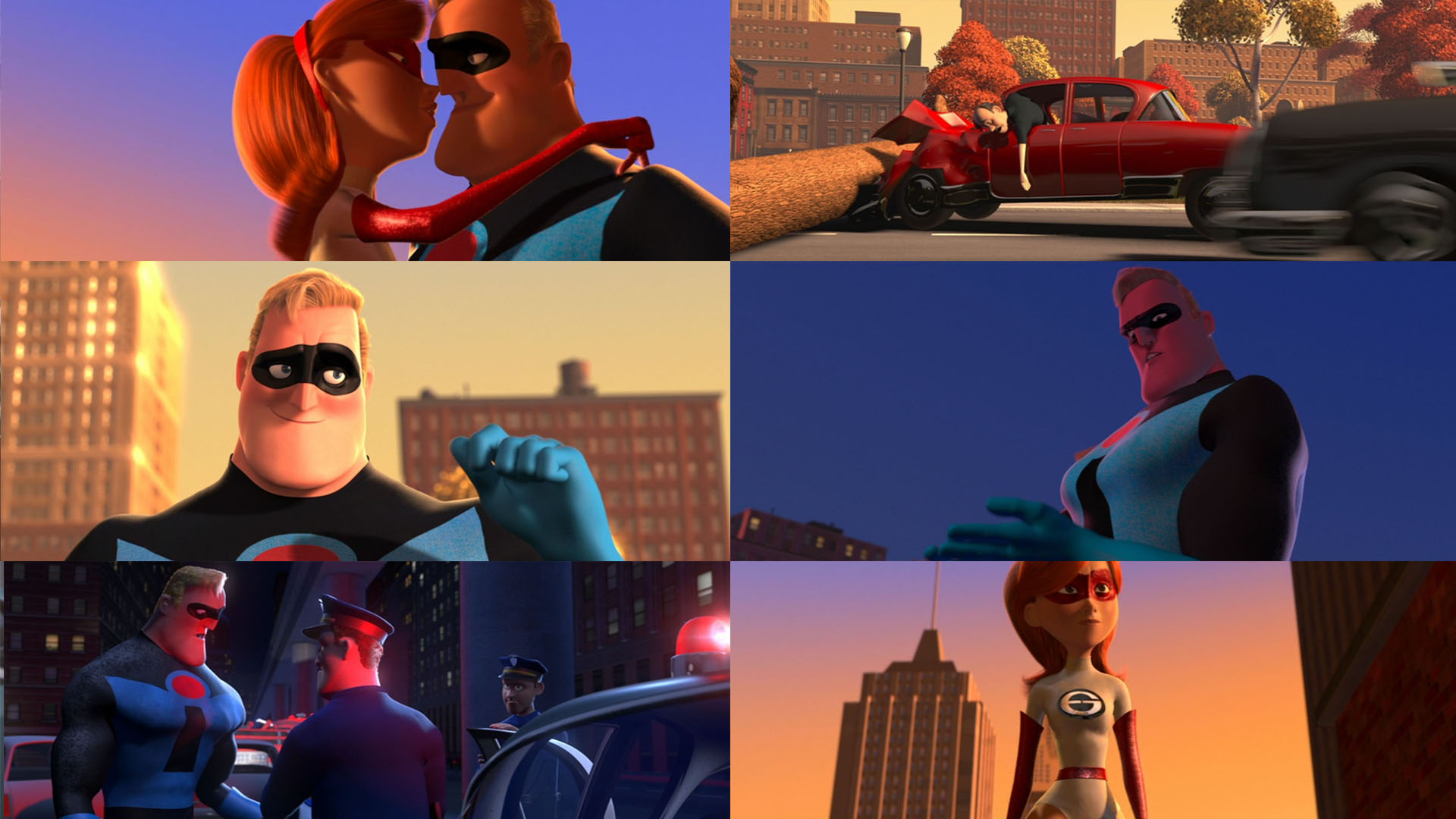
Looking at the movie bar code of Incredibles doesn’t seem like anything useful at first glance, but trust me, there is a story hidden in those bars, so let’s take a closer look…

The Incredibles (2004)

The first set of pictures is basically random selection of screenshots from the beginning of the movie. On the movie bar code (above), I marked it as a “PART 1”. These were the glory days of superheroes, fighting crime in the city and saving people’s lifes. And those glorious times are further depicted by the color palette. The colors used in the first few scenes are highly saturated – full of live and energy.

But then, there was the lawsuit against all superheroes in the city. They were forced to stop using their superpowers and fit in with the rest of the citizens. So Bob (one of the main superheroes) starts working at insurance company and experiencing the “normal” life.

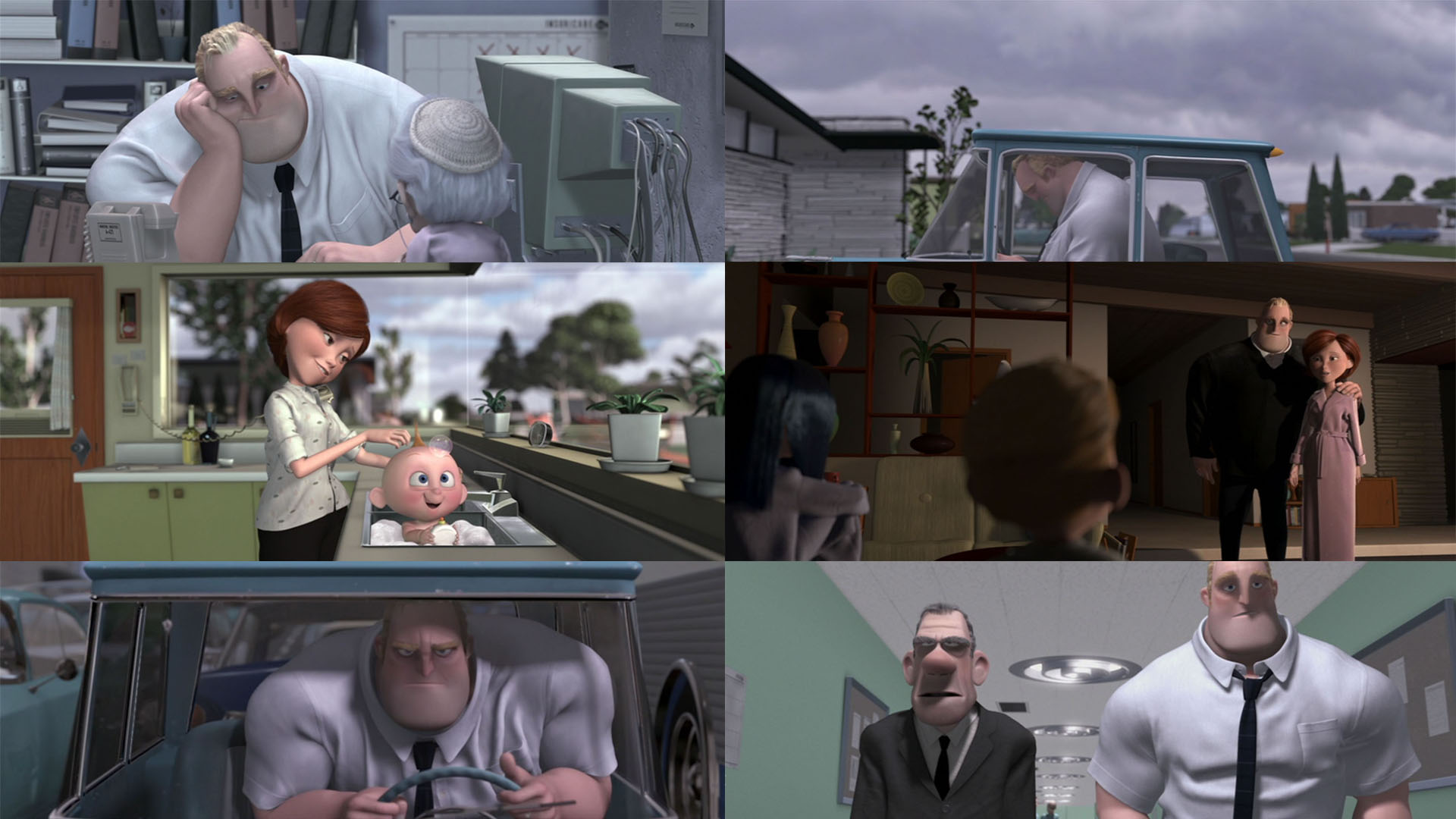
The following set of pictures was taken after the lawsuit, marked as a “PART 2” on the movie bar code.

The Incredibles (2004)

The colors are now desaturated and muted. The prevailing color from these scenes is grey/pale green/brown (also visible on the movie bar code above).

Hopefully you can see now, what happened in terms of color palette- from highly saturated colors at the beginning (saving people’s lifes, fighting crime, basically doing what superheroes are meant to do), to desaturated, pale and muted colors after the lawsuit (having a boring job and “normal” life).

In this case, the color palette was used to document change of Bob’s life, when he had to stop using his superpowers and get a “normal” job, but I can easily imagine using this change in color palette in various different situations – the most obvious one would be being with someone who you love and than losing him/her. Or… (type in the comments below).

Links


P.S. If you’d be interested in other example of cinematic storytelling in Incredibles, here is an article I wrote back in February 2012.

P.P.S. The movie bar of Incredibles can be found here: moviebarcode.tumblr.com