Two worlds in Limitless

When I read articles related to movies, it happens quite often, that I’ll read something like this:

“We used camera to tell a story…  Sound played a really important role, it helped to tell the story…”

And I always get frustrated, because usually (99% of time) it is not clear what they meant by that. The sentences above leave me asking: It’s nice, but what exactly did you do?

Well, the interview by Debra Kaufman with cinematographer Jo Willems at creativecow.net is one of those rare exceptions, where you’ll learn not only what they did to help telling the story, but most importantly – why.

Eddie Morra (Bradley Cooper) is a wrecked writer whose life is falling apart. Well, one day he is visited by old friend Vernon (Johnny Whitworth) and he offers him a pill: “You know how they say we can only access 20% of our brain? This lets you access all of it.”  So what this pill does is that it fully unlocks the potential of human brain, in other words, you get access to super human abilities.

Limitless (2011)
Limitless (2011)

When I saw the movie for the first time, I noticed the change in color grading, when he takes the pill – everything is graded towards warm sunny tones (especially yellow and orange),
Limitless (2011)
Limitless (2011)

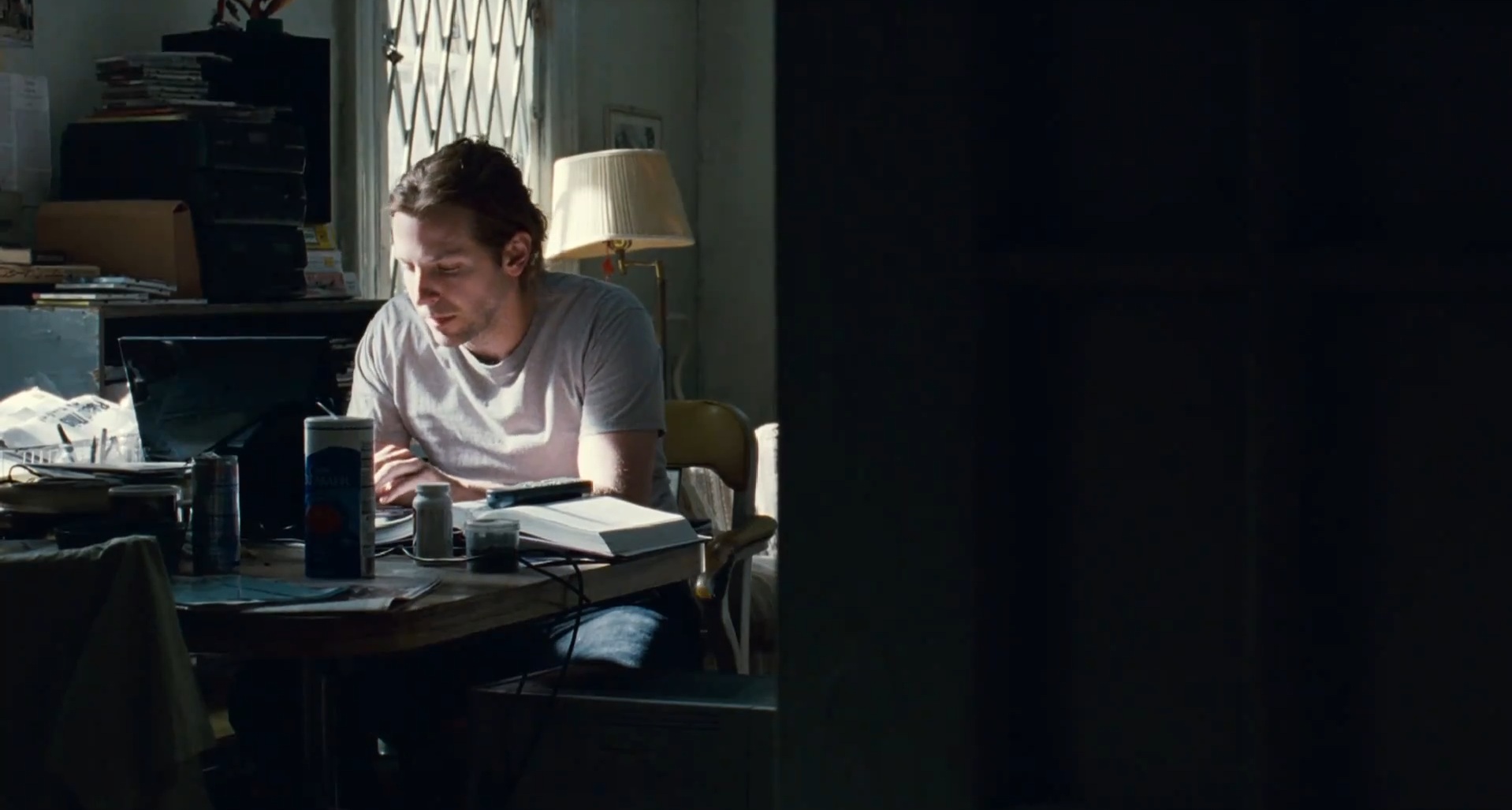
while when he is not on the pill, there is a lot of cool tones (especially blue), the colors are desaturated, everything seems darker and more contrasty.

Watch the trailer and try to focus only on the tones. I’m sure, that just by looking at the tones/colors you’ll be able to tell, whether he is on the drug or not. But there is more to that, so let’s take a look what else did they do, to differentiate the two worlds:

World 1 – Down and broke (off pill) World 2 – Powerful and charismatic (on pill)
Camera moves hand held dollies, cranes, steadicam
Film stock Fuji Kodak
Lighting uncontrolled (hard and fractured) controlled (softer and diffused)
Lenses longer focal length (tele) shorter focal length (wide)

Ok, the table above sums up, what they (Neil Burger, Jo Willems and others) did, to differentiate the two worlds when he is on/off the pill. But far more interesting is to read why! 🙂

Links:

Behind the Lens: DP Jo Willems & Limitless


Watch the trailer and notice the dolly-zoom move at 0:45. You can read more about this technique by clicking here.
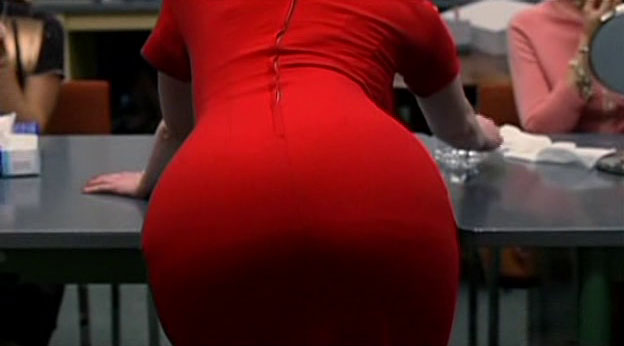
Red as a symbol of sexuality and desire

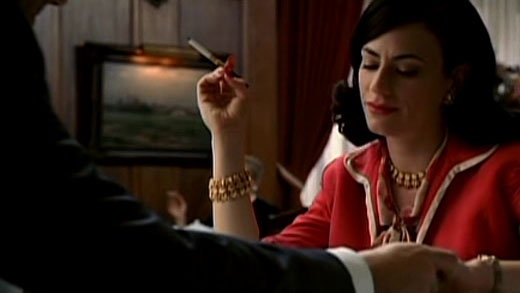
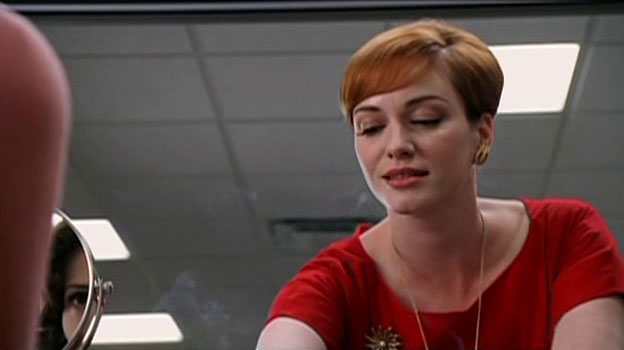
There is a great scene in Mad Men (S1 E6), where girls are asked to try out some lipsticks. Secretly, they are being watched by a couple of men through a mirror in opposite room. Joan (the red dress) is the only one among girls who knows that and she does enjoy it.

So while other girls are trying out the lipsticks, Joan entertains the men behind the mirror and drives them totally crazy, especially when she leans over and puts out a cigarette. Wow, that was sexy! Sexy is also her dress, but most importantly, the color!

Mad Men, Series 1, Episode 6


The red color of her dress is by no means an accident. Costume design plays actually a big role in each episode and gets even analyzed!

I am completely aware, that this color may represent many other things (violence, danger, happiness, anger) and this largely depends for example from which country do you come from.

But in this case, I think that the color red represents the symbol of sexuality and desire. Here are other examples from the same episode:

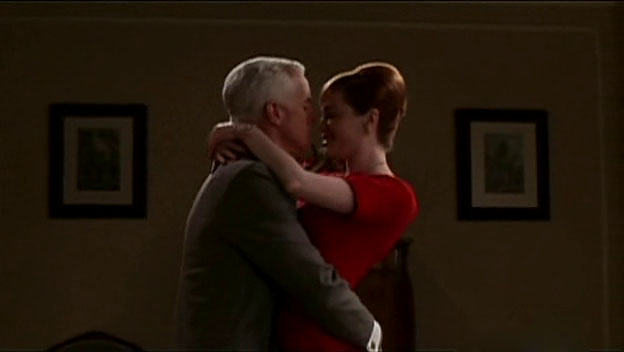
  1. Roger seduces Joan in a hotel room.
  2. Don dates Rachel.
Mad Men, Series 1, Episode 6


Visual storytelling in Shutter Island

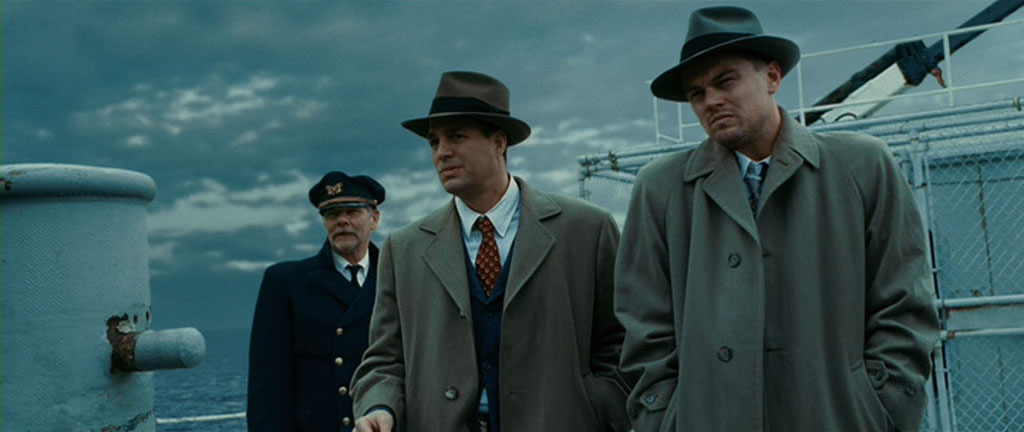
Shutter Island (2010)

Andrew Laeddis (Leonardo DiCaprio) is a patient at Shutter Island. He can’t deal with the traumatic reality in his life (death of his children and wife), so he creates an imaginary world, in which he is a federal Marshal Teddy Daniels.

When you see the movie for the first time, you are led to believe, that Teddy Daniels is a real person, only to find out later, that he is actually the missing patient 67. But if you watch the movie again, you’ll notice, that there are clues throughout the whole movie, that the world of Teddy Daniels is imaginary. Let’s take a look at one example.

Shutter Island (2010)

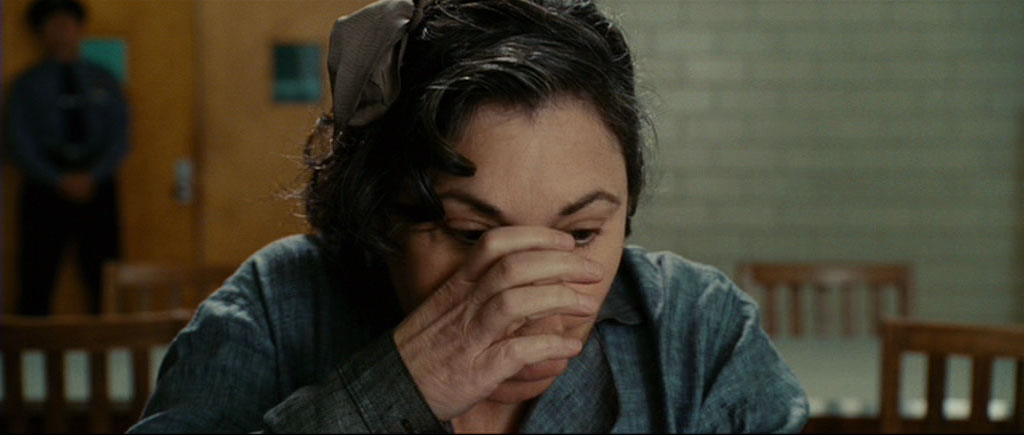
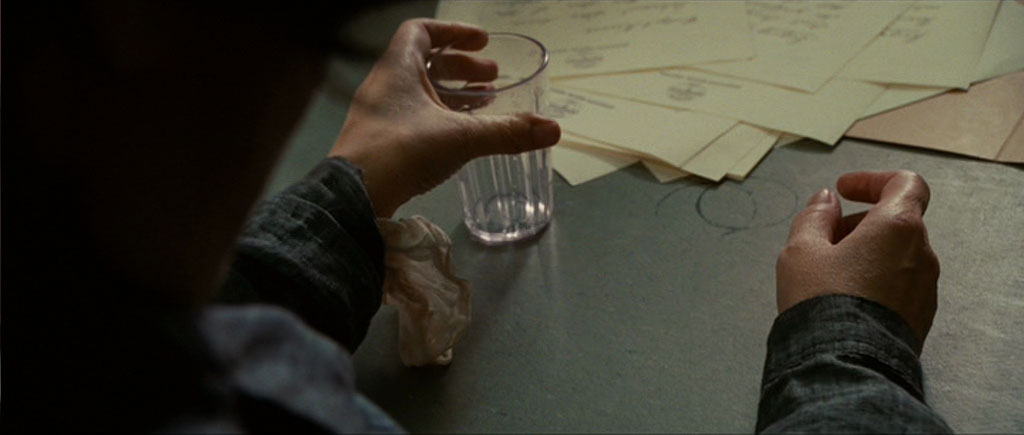
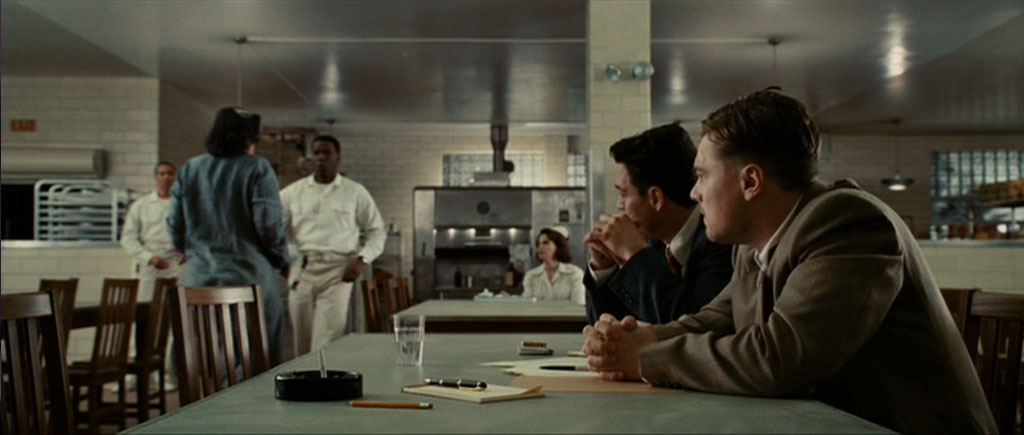
When Teddy interviews Mrs. Kearns, she pretends to drink from a glass of water.

Shutter Island (2010)

In the next shot, she puts down the glass of water, but now its a real glass. Notice, that in the previous shot, the glass was in her right hand, while in this shot, the glass is in her left hand.

Shutter Island (2010)

After a while, she leaves. Now, if you look closely, you’ll see that there is a water in the glass, which wasn’t there before. (I highly doubt, that this was an editing mistake.)


I’m going to write more about visual storytelling in Shutter Island and extend this article as soon as possible! To stay updated about future write ups (to other articles as well),  you can follow the blog on Facebook.