Poetry and Symmetry of Storytelling in Toy Story 3

I’ve watched recently Toy Story 3, but this time with audio commentary by director Lee Unkrich and producer Darla Anderson. This blog post was inspired by their commentary and draws heavily from it.

With movies, it’s all about setting it up and paying it off consistently, to create this poetry and symmetry of storytelling.

Saying goodbye is never easy, especially to someone who you’ve known for a long time, some you’ve loved or just deeply cared about.

There is a scene, when Woody is leaving the toys. It gets very emotional, because they have been together for so many years. They get into argument. Both sides have to say things and they are not very nice. It’s a messy break up, because when Buzz extends his hand to Woody, he refuses to shake it.

Toy Story 3 (2010)
Toy Story 3 (2010)

Later in the movie, there is a scene, where the toys are taken to the dump. It’s the biggest fear of a toy. It’s not like getting thrown away or being outgrown by a kid, because that’s not the end of a toy. But heading into inferno of incinerator, that’s the ultimate end.

The toys are trying to climb up the trash, but they very quickly realize, that this is not an option. They are falling into the incinerator and slowly sliding toward their doom. There is no way out, no option, this place is inescapable.

So there is this wonderful and extremely emotional moment, when all toys come together as a family. Buzz reaches out to Woody and this time, he accepts his hand without hesitation. This moment intentionally mirrors the earlier scene, where Woody refused to shake Buzz’s hand. They all hold hands, they bond as a family, close their eyes and face together their doom.

Toy Story 3 (2010)
Toy Story 3 (2010)

It’s extremely emotional, because now we have this “family reunion” to contrast the messy break up in the earlier scene. This is what Darla Anderson meant by “setting it up and paying it off”.

The incinerator scene is extremely emotional even if you only look at the still frames above. It’s not just about creating the symmetry of storytelling (setting it up and paying it off). It works so well, because there are additional layers of meaning.

The toys realized in this scene, that the most important thing is that they have each other… is there anything more important?
Inside the head of Jake La Motta and Victoria Page

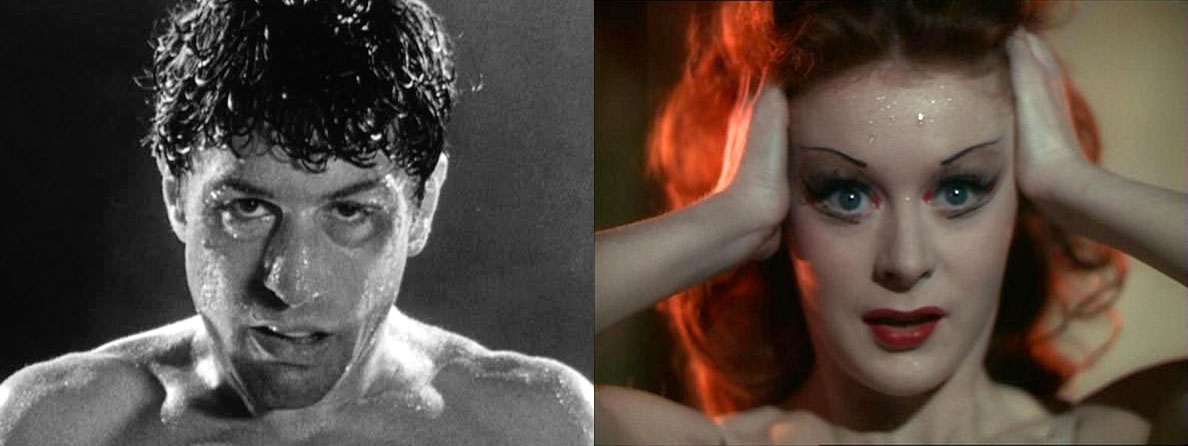
The standard way of shooting a ballet scene, up until 1948, would be to photograph the dancers from head to toe. However, Red Shoes – photographed by Jack Cardiff – completely changed this. The movie is photographed in such a way, that we’ll see what goes on inside the dancer’s head – we are shown what they see(=their POV). (And there is nothing better than POV when it comes to sound design, but wait! 🙂 )

Few years later, Martin Scorsese applied this in boxing scenes in Raging Bull. If you pay attention, you’ll notice, that the camera stays always inside the ring. Watch the video below to see a comparison of ballet and boxing scenes in Red Shoes and Raging Bull (taken from the documentary Cameraman: The Life and Work of Jack Cardiff):

The similarity is clearly visible. But Martin Scorsese took this concept even further.

POV and Sound Design

The POV shots are amazing opportunity for sound designers – the POV gets us inside the head of the character. That means, that we see what they see, but also hear what they hear! And this is extremely exciting, because you can, as a sound designer, play with the sounds what they hear. Being inside the head of the character gives you license to distort and manipulate the sounds.

Frank Warner, the sound designer of Raging Bull, created whole library of sound effects, that you’ll hear during the boxing scenes. These include: Smashed watermelon and tomatoes, animal like noises, gunshots(these were used for the sound of camera flash bulbs going off) and many others. (Sound mix for Raging Bull took six months!)

I can only guess, what sound effects were used in the boxing scenes, but the truth is, that even Martin Scorsese doesn’t know. Frank Warner was so protective about his sound effects, that he destroyed them later, so nobody else could use them again.

Anyway, POV shots are brilliant for sound design. Especially for self-destructing characters like Jake La Motta.

Plus, the boxing ring in itself creates an attractive environment for sound design. I think everyone would be interesting in terms of sound design when standing inside the boxing ring, not just Jake La Motta. In boxing ring, you just see and hear differently, trust me.

In January 2012, I wrote a post about POV and sound design, you can read it by clicking here.

Links:

Cameraman: The Life and Work of Jack Cardiff

Costume design in Dial M for Murder

Today I have a very short example of cinematic storytelling. Nevertheless, it comes from the master of cinematic storytelling himself, hope you’ll like it.

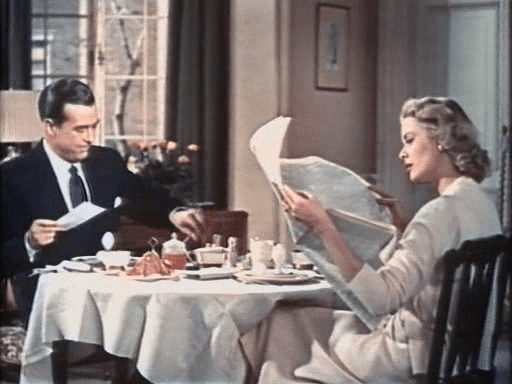
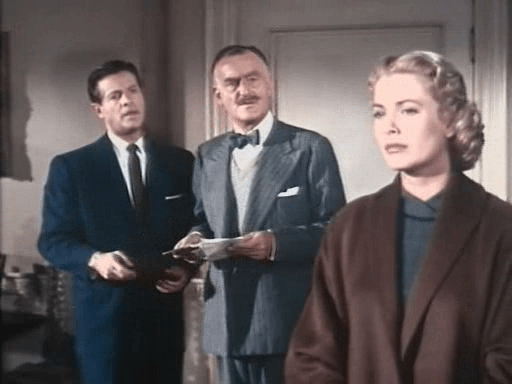
During his conversation with Francois Truffaut, Alfred Hitchcock mentioned an interesting example of using costume design as a storytelling device.

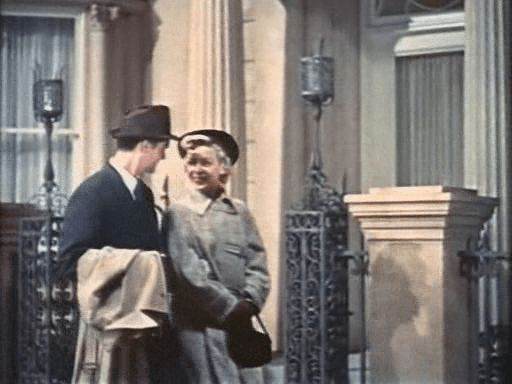
We did an interesting color experiment with Grace Kelly’s clothing. I dressed her in very gay and bright color at the beginning  of the picture, and as the plot thickened, her clothes became gradually more somber.

The plot of the movie is quite simple: Tony tries to murder his wife Margot, however, things don’t go as planned, so he has to think of plan B. And everything is reflected in Margot’s costume design, which changes from bright colors to more somber, as the story unfolds. Judge by yourself:

Dial M for Murder (1954)

(This the only exception, when she is in her underwear.)

Dial M for Murder (1954)


I would probably never notice this without reading the Hitchcock book, but again, this is the beauty of cinematic storytelling!


Alfred Hitchcock likes to appear in his movies at various places and in various forms, and this one is especially great! 🙂

Dial M for Murder (1954)